
13 Ways to Get Your Summer Thrills in Tasmania
Make the most of the longer days this summer with adrenaline-fueled adventures and nature-rich experiences, right on your doorstep.
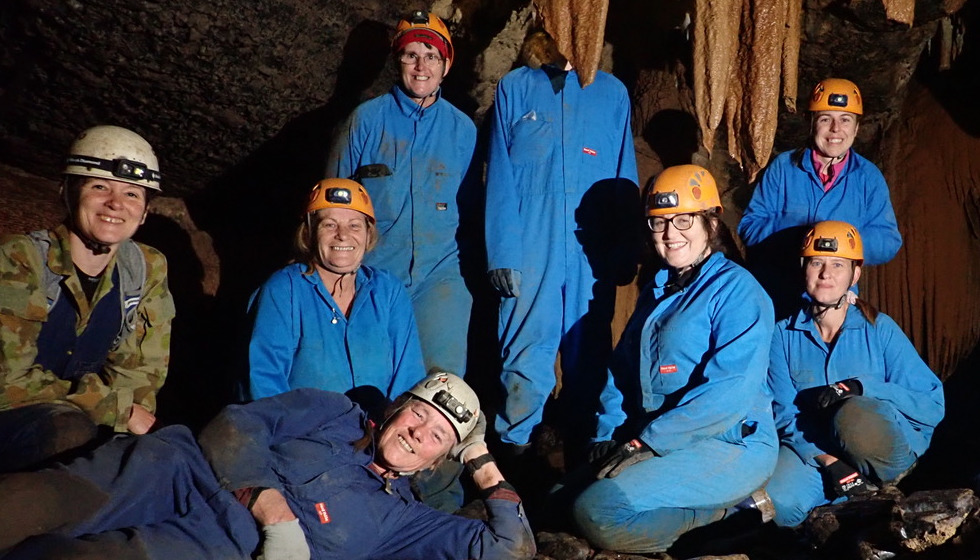
Beneath your feet in Tasmania, there’s an entire world most of us never see. A hidden, underground realm of sprawling cave systems with subterranean rivers, sharp mineral deposits that rise from the ground or dip from the ceiling, and caverns lit up by glowworms. They’re stunning, if you have a light to see them. They’re also pretty dangerous. We’re talking tight squeezes, sheer drops, and a kind of darkness that feels like it’s pressing in on you. It’s not exactly a walk in the park. And yet, some people are drawn to it, compelled to crawl into the earth, to explore these strange, alien spaces.
Deb Hunter is one of those people. She’s spent most of her life in north west Tasmania, particularly around the Mole Creek Karst National Park, home to more than 300 known caves. It is here she ran Wild Cave Tours, leading curious people deep into the earth to show them something extraordinary. She’s passionate about caves and the importance of respecting them.
Now semi-retired, Deb has recently stepped back after a reverse shoulder replacement. “I’m a bionic woman,” she says, dryly. But don’t be fooled, she’s not done. Once her shoulders have healed, she’s planning on going back underground informally with mates. You can’t keep her away from the caves.
She’s been doing this for nearly 50 years. “If it’s your thing, you get taken immediately,” she says of her early days underground. Back in the 1970s, it was very difficult for women to be accepted as cavers, so she had to deal with a lot of pushback to pursue it. “It was not regarded as a female activity at all,” she says. “It was, ‘Keep up and shut up’.”
But she kept at it. For decades. This year Deb received a prestigious Award of Distinction at the Australian Speleological Federation for her contributions to speleology (the study or exploration of caves). Particularly for her work in developing cave rescue plans and her commitment to the conservation of caves in Tasmania. “It’s an honour to be recognised for your life’s work,” she says.
Among cavers, Tasmania is famous. It’s known for its deep, vertical systems, stunning beauty, and preserved ecosystems. And it’s not just about geology. There’s life down there too. Strange life. Tasmanian caves are home to ‘living fossils’, creatures that have survived through multiple ice ages. In the Mole Creek area alone, Deb says there are 13 cave-dwelling species found nowhere else on Earth. Among them are the famous cave Spider of Tasmania, the Tasmanian mountain shrimp, glowworms, and wingless cave crickets. “These are amazing weird creatures. And by spending time in caves, you get to know these animals,” she says.
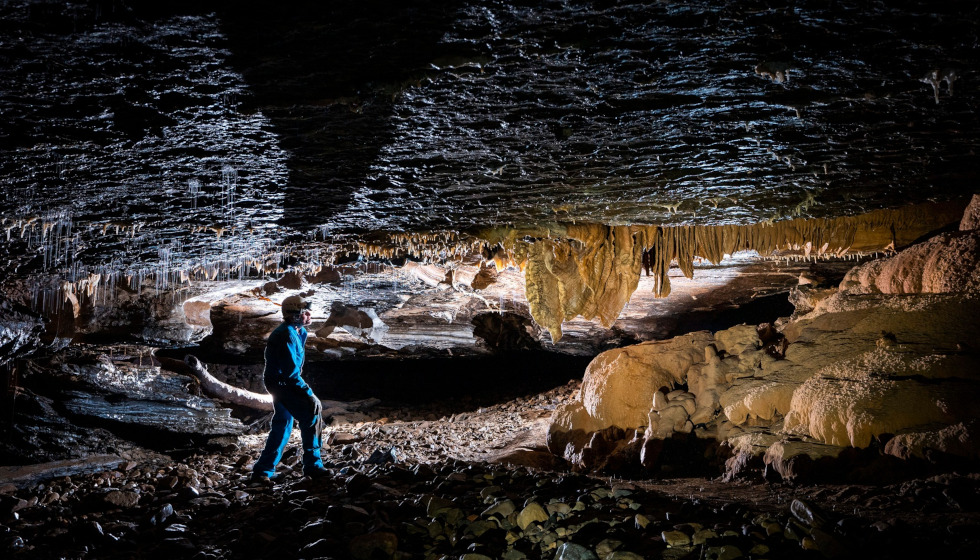
But what does Deb love about caves? For some, it’s the natural beauty, and for others it’s the adventure. For Deb it’s something more personal. “The cave doesn’t care whether you are there or not,” she says. “All you confront in there is yourself. That’s what it comes down to.”
Caves are fragile places, and not everybody who enters them understands that. Some go in unprepared and unaware, just chasing the thrill, and in doing so, cause lasting damage. Deb believes beginner caves, that are already impacted, should be where people start to learn and gain awareness on safety and conservation “If you don’t look after yourself and you have a problem, then the people you are with will have to fix it for you,” she says. “And nothing wrecks a cave like the need for a rescue.”
That’s why Deb started cave rescues at Mole Creek and why she’s still involved today. “We are living in an age where there’s a strong sense of entitlement. People are paying little regard whatsoever to safety. We’re seeing more and more rescues in outdoor settings, and it’s irresponsible and it’s a strain on the system because most of the people who do the rescuing are volunteers.”
The best way to responsibly get into caving, and learn how to take care of yourself and the cave, is by joining a club. Tasmania has four of them, and Deb herself is a member of Southern Tasmanian Caverneers. “The clubs are not like other clubs,” she says. “Cavers come from all walks of life, all social and economic classes.” Plus, you get the opportunity to meet people and develop as a team, which is important because caving as a necessity is a group activity. “You can’t do it on your own,” Deb says. You can find more information about clubs and how to get involved at www.caves.org.au.
It’s by getting into clubs that a whole world opens up to you, according to Deb. She’s explored some of the most remote parts of Australia with fellow cavers, working with traditional owners and geographers to discover and document these remarkable underground landscapes for their future protection. These experiences, she says, have been some of the most intense yet rewarding of her life. She cannot wait to recover from her surgery and get back underground. For Deb, there’s nothing better than getting down there in the dark.


Stay up to date with everything happening at the Hobart Magazine.