
13 Ways to Get Your Summer Thrills in Tasmania
Make the most of the longer days this summer with adrenaline-fueled adventures and nature-rich experiences, right on your doorstep.
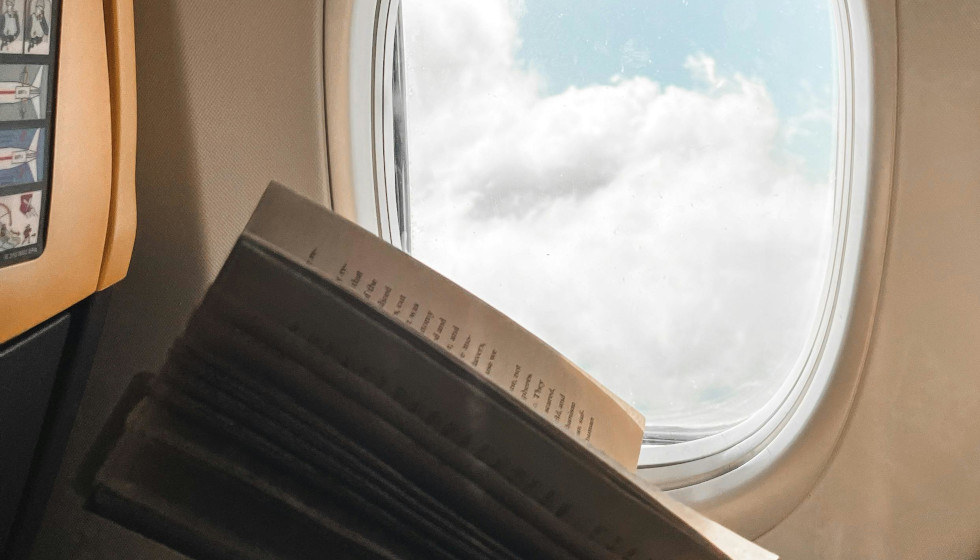
I know how lucky I am to have been able to travel from time to time, and I don’t want to seem ungrateful. However, the older I get the more I acknowledge an inescapable drawback to long-haul voyaging – the actual flight. If, like me, you’re condemned to sit in Economy.
Initially it sounds idyllic: all you have to do is sit down for at least a day – 30 hours on my recent three-stage flight to Helsinki – and read or binge-watch movies, while a flight attendant brings you food and drink at regular intervals. No one admits that after the first six hours you’ll feel like screaming. Especially if you are tall and long-legged like me. (I’m deliberately ignoring the new viral trend of “raw-dogging a flight” here, where crazy people apparently choose to endure a long flight without any entertainment or distractions at all, presumably to demonstrate their invincibility.) As I boarded recently, shuffling my way through Business Class before reaching Economy, I tried not to feel envious as I side-eyed the dinky little partitions where the favoured few could close out the rest of the world, arranging their paraphernalia in handy compartments and stretching out their legs as they sipped their free champagne, secure in the knowledge they were going to get a decent sleep and wake up refreshed and then gourmet-fed.
I did the trip home with a broken right arm, and I’ll say this – if you think it’s hard trying to balance your tray on the tiny extended table and open sachets, containers and other annoying bits of plastic and foil with two hands, just imagine being temporarily reduced to using one.
The high point of my recent flight was actually when I started reading Ann Patchett’s 2016 novel, Commonwealth – which was just the right small-paperback size for adding to my hand luggage. It was so absorbing that I forgot I was uncomfortable for whole chunks of time and by chapter eight I was laughing out loud with delight as she mirrored my own current situation: “The flight from Los Angeles to Paris was twelve hours. Teresa accepted the free wine whenever the cart rolled down the narrow aisle, slept fitfully against the window, and tried to read The English Patient. By the time the plane landed in France she had aged twenty years. Prosecutors should insist the trials of murderers and drug lords be held in economy class on crowded transatlantic flights, where any suspect would confess to any crime in exchange for the promise of a soft bed in a dark, quiet room. Off the plane, stiff and slow, she shuffled into the river of life: the roll-aboard suitcases trailing behind the cell-phone-talkers like obedient dogs, everyone walking with such assurance that it never occurred to her not to follow them. She was too muddled to think for herself, yet when she finally did, snapped back to reality by the sight of an information desk, she was told that her departure gate was in another terminal that could be accessed by shuttle bus, and that the flight to Switzerland was three hours delayed… Her feet had swollen on the flight and were now a full size larger than the shoes she was wearing.”
Thank heavens for writers who can so endearingly encapsulate the human experience!
Of course in hindsight, even this long flight sounds a whole lot better than the one in Liane Moriarty’s recent novel, Here One Moment, which begins with an ordinary domestic flight from our own Hobart Airport to Sydney. After an initial delay, all goes smoothly and we focus increasingly on one of the passengers, an unremarkable lady from aisle seat 4D:
“She does not applaud with slow sarcastic claps when the plane finally begins to taxi towards the runway. During the flight, the lady does not cut her toenails or floss her teeth. She does not slap a flight attendant. She does not shout racist abuse. She does not sing, babble or slur her words. She does not casually light up a cigarette as if it were 1974. She does not perform a sex act on another passenger. She does not strip. She does not weep. She does not vomit. She does not attempt to open the emergency door midway through the flight. She does not lose consciousness. She does not die. (The airline industry has discovered from painful experience that all these things are possible.)”
What she does do, however, is make her way up the aisle, calmly predicting how and at exactly what age many of her fellow passengers will die…
Suddenly an uneventful flight like mine seems a lot more palatable. Armchair travel is also sounding like a good option – curling up with a great novel or an absorbing work of non-fiction, sans the flight. For as British philosopher A.C. Grayling once observed: “To read is to fly: it is to soar to a point of vantage which gives a view over wide terrains of history, human variety, ideas, shared experience and the fruits of many inquiries.” Without even having to pack a suitcase.

Stay up to date with everything happening at the Hobart Magazine.