
13 Ways to Get Your Summer Thrills in Tasmania
Make the most of the longer days this summer with adrenaline-fueled adventures and nature-rich experiences, right on your doorstep.
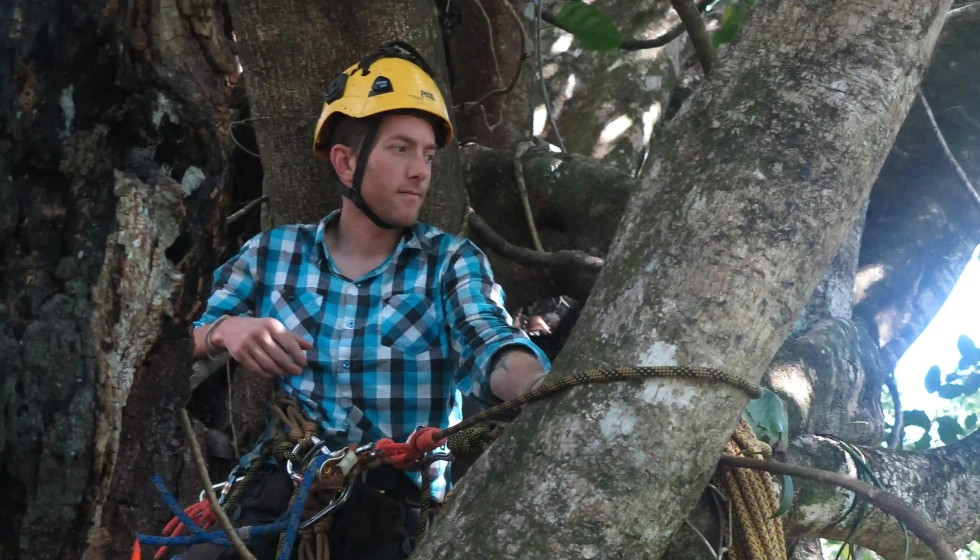
Often seen up a tree, Y. Daniel Bar-Ness grew up in California and studied the coastal rainforests near Seattle. He now resides in Tasmania, where he leads Giant Tree Expeditions, guiding people to the island’s most spectacular trees.
Where did you grow up and where do you live now? I learned to walk and talk in Silicon Valley, at the southern end of San Francisco Bay. And now I live on the up-side-down part of the world on a magical island!
You’re from the US and you’ve travelled the world. Why did you decide to settle down in Tasmania? It’s a good place. I originally came here to study the giant forests of Tasmania as a research treeclimber. My father is from Melbourne so Tasmania was just the right distance away from that city. As for settling here, well, I realised I could either join my sweetheart in Tasmania or spend the rest of my life regretting it. And to set up on an island in the farthest corner of the world: actually, I feel like I’m still travelling, and wake up every day with a sense of novelty and wonder about where we are.
Looking back on your travels, what are some of the most fascinating forests/ trees you’ve seen? The giant banyans of India are fantastic – singular individual trees sprawling 200 metres horizontally as a network of wood. Arguably the largest trees on Earth. The Southern Pines of New Caledonia are a pilgrimage site for botanists worldwide. I’m quite partial to the towering Sitka Spruce rainforests west of Seattle, holding aerial gardens of moss high on their branches. You might find it interesting to know that there is a Eucalyptus tree growing near Hiroshima Castle that survived the atomic blast, and grows strongly today.
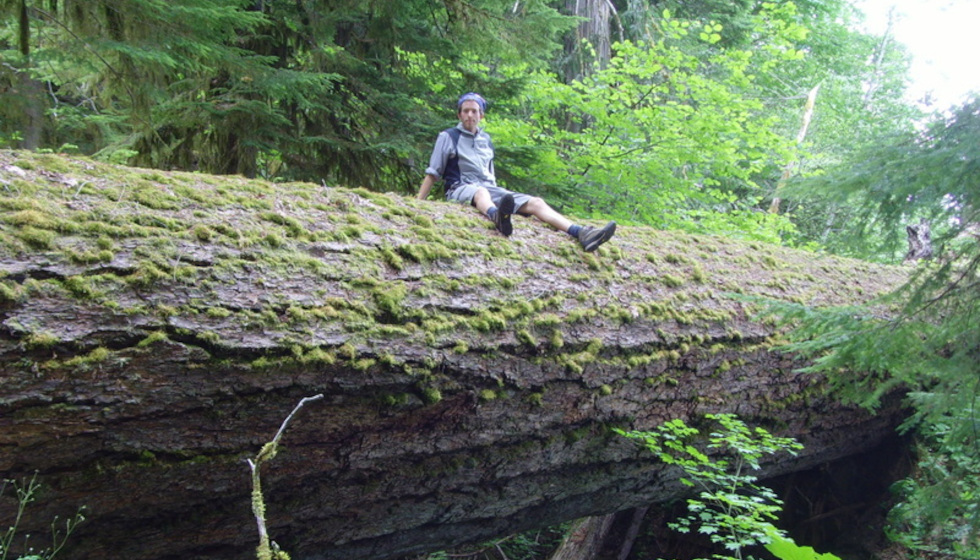
What makes Tasmanian forests different from the rest of the world? Tasmania has some of Earth’s last examples of cold rainforests descended from the Antarctic forests of the last hundred million years with some of the best remaining examples of ultra-sized giant Eucalyptus regnans, the tallest flowering forests on Earth. It’s a unique combination of the relict rainforests, which love stability, and the giant-sized Australian bush, which love disturbance. There’s also a wide variety of tangled scrubs, open woodlands, grasslands, sedgelands, herbfields, coastal heaths, and more. If you imagine that you’re only a few centimetres tall, all of these other environments are giant forests as well!
What are some of your favourite places in Tasmania to see trees? Here in Tasmania we’ve got the Pencil Pine and King Billy Pine, which together are the Tasmanian Redwood’s not-so-distantly related to the more famous ones in California. You can find them both as you ascend onto the plateau at Mount Field National Park.
What’s one thing about trees that you wish more people knew? Trees are individuals. Admittedly that’s less about knowing and more about appreciating; it’s something everybody knows deep down but it’s easily forgotten. If you can use the part of your brain that identifies social connections as you navigate the world, you’ll begin to recognise individual tree – and rocks! – as familiar, friendly landmarks.
Who do you admire? Sunrise swimmers.
Favourite podcast or tv show? BBC The History Hour.
What are you reading now? Child of Gondwana by Keith Corbett – “A guide to the geology of Tasmania for everyone”.
What was your first job? Digitally scanning semiconductor blueprints drawn up in the 1960s for an electronics manufacturer.
What are your daily news/social media habits? Look at the clouds, talk to my neighbours, smile at strangers.
Your favourite place for…
Breakfast: In front of a tent in the mountains.
Lunch: Picnicking in the ancient forest with Expeditioneers.
Dinner: The beach!
Dream holiday destination? Queenstown, Tasmania – gateway to incredible wild places!
Favourite Tasmanian secret? The South Hobart Tip Shop.
Parting words? Let’s bring daylight back to the Hobart Rivulet!
Stay up to date with everything happening at the Hobart Magazine.