
13 Ways to Get Your Summer Thrills in Tasmania
Make the most of the longer days this summer with adrenaline-fueled adventures and nature-rich experiences, right on your doorstep.

You might have seen the social media storm that surrounds the annual Met Gala in New York. Each year the fundraising event brings together a diverse group of high profile celebrities deemed by Vogue’s global editorial director Anna Wintour to be fitting of the spectacle. Alongside the annual Met Gala fundraiser, which will take place on 4 May, there’s the Costume Institute’s spring 2026 exhibition, Costume Art. There’s a surprising Tasmanian connection to the exhibition via Dr Llewellyn Negrin, a Hobart-based researcher.
How did a researcher based in Hobart come to write the introduction to the catalogue for one of the world’s most high-profile fashion exhibitions? In my professional life as Head of Art and Design Theory at the School of Art, University of Tasmania, I published widely in the area of fashion theory in international academic journals such as Body & Society; Theory, Culture & Society; Feminist Theory; European Journal of Cultural Studies and Critical Studies in Fashion and Beauty, as well as in various edited collections such as Fashion and Art and Thinking through Fashion. I also published a book, Appearance and Identity: Fashioning the Body in Postmodernity. It was through these writings that Andrew Bolton, chief curator at the Costume Art Institute, Metropolitan Museum of Art, New York, became aware of my work. Particularly influential for him were my essays on fashion as an embodied artform, and these have become pivotal in his conceptualisation and curation of his latest exhibition Costume Art. This led him to invite me to write an essay for the catalogue accompanying this exhibition, as well as to provide feedback on his curation of the exhibition.
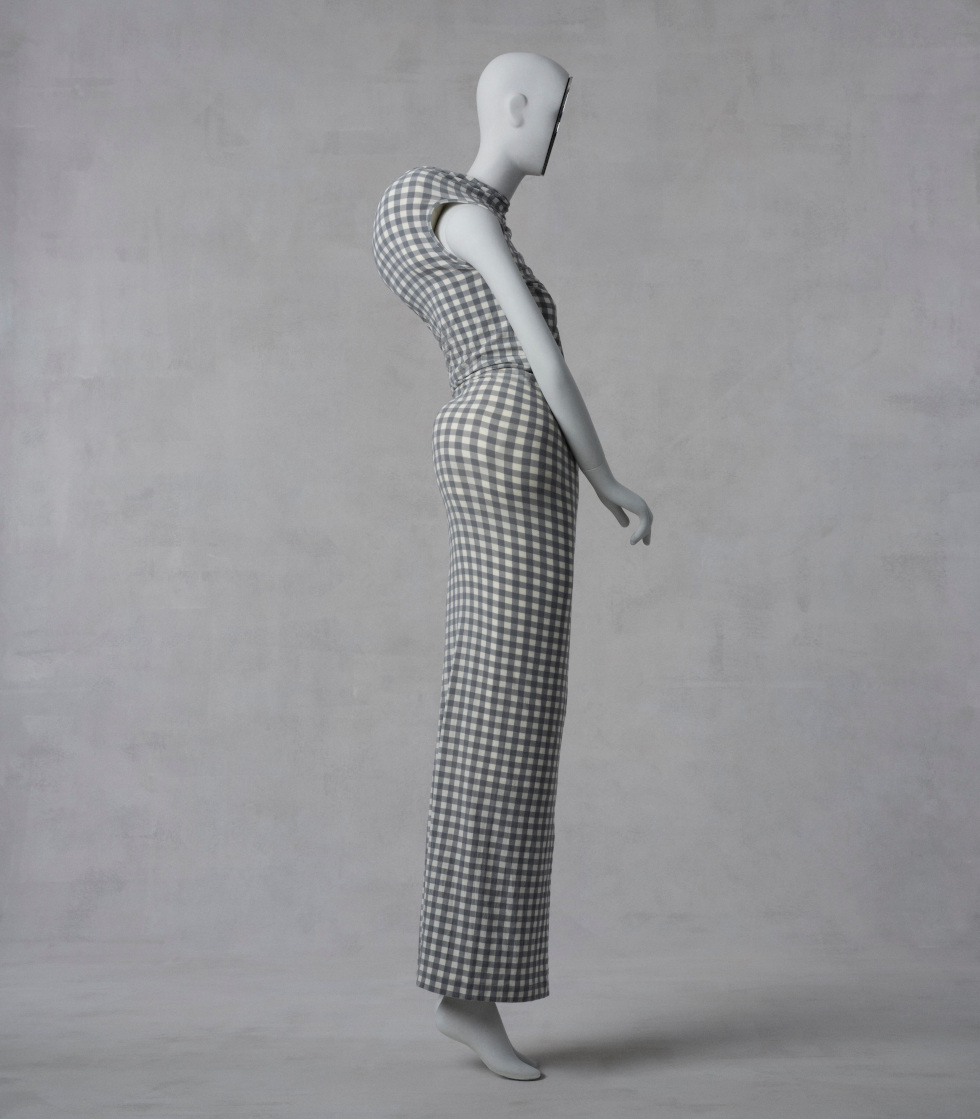
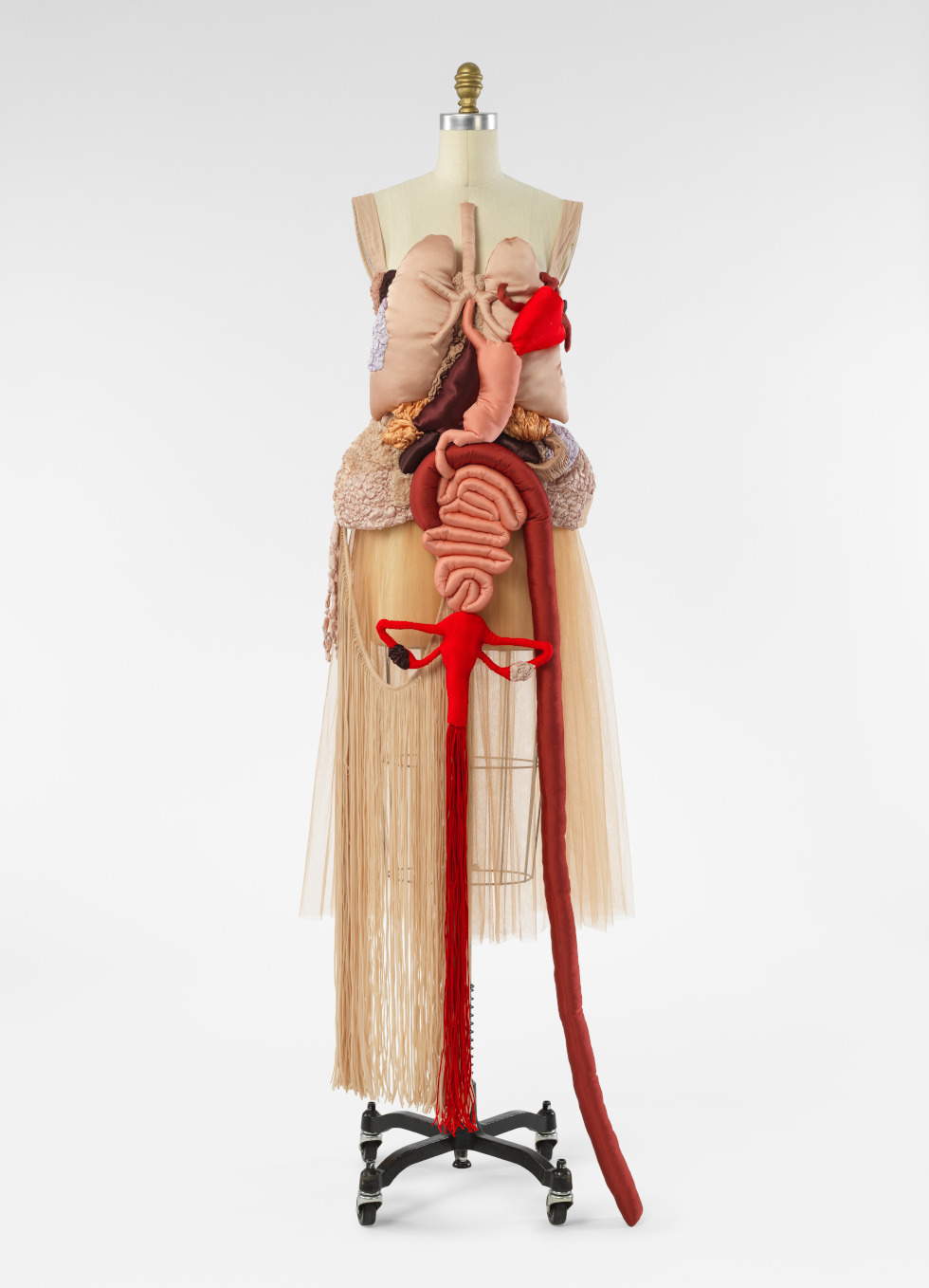
The exhibition explores fashion as an embodied art form rather than a purely visual one—what does that distinction mean, and why does it matter? With the increasing prevalence of fashion exhibitions in art museums, fashion has come to be treated as a purely visual art form that can be understood solely in aesthetic terms, disconnected from the body. In the process, what has been overlooked is how these garments are experienced by their wearers not just as visual artifacts to be looked at, but also as material garments that are worn. Rather than seeking to deny or suppress fashion’s association with the body, this exhibition aims to highlight the indissoluble connection between our bodies and the clothes we wear. In its embrace of fashion’s corporeality, this exhibition seeks to counter the privileging of mind over body–an idea deeply engrained in Western thought–and to highlight the more multi-faceted nature of our sensorial engagement with fashion. We engage with fashion not just through our eyes but through our bodies and it is this bodily awareness that the exhibition seeks to evoke. It does this in part through the inclusion of body types not normally featured in fashion exhibitions such as the pregnant body, the corpulent body and the disabled body, making use of custom-made mannequins, modelled on the bodies of actual people which depart from the idealised proportions of standardised mannequins.
The Met Gala dress code this year is “Fashion is Art”—do you think the public understands that idea well, or is there still work to do in making that case? I think that while there is now broader public understanding of the idea of fashion as art, it tends to be based on a traditional conception of art as a purely visual experience. The exhibition, from which the Met Gala theme is derived, is seeking to broaden the concept of aesthetic experience beyond the purely visual to focus on the interrelation between the body and the garments in which it is clothed. It is about embracing the body rather than seeking to disavow it.
What does it mean to you personally, as a Tasmanian, to have your work featured at this level on the world stage? I feel it is a great honour to have received such recognition, even though I live in a relatively remote part of the world. I am particularly thrilled at the way my ideas have influenced a new direction in the way fashion is presented in art museums, in such a pre-eminent institution as the Metropolitan Museum of Art.
Your book Appearance and Identity: Fashioning the Body in Postmodernity explores fashion’s relationship to the body—how has your thinking on that topic evolved over the years, and does the Costume Art exhibition reflect where you’ve landed? My focus in the book Appearance and Identity: Fashioning the Body in Postmodernity was on a critical interrogation of the importance placed on physical appearance in contemporary society where the visual presentation of self is privileged over other forms of self identity, particularly in the case of women, who tend to be judged by their looks. Since then, my attention has shifted to an exploration of the haptic experience of fashion, i.e. how it impinges on the body of the wearer, and mediates our practical interaction with the world. Clothing is not just about the construction of an image but also shapes the way we comport ourselves in the world and it is this aspect that I have focused on in my more recent writings. The Costume Art exhibition reflects the culmination of my investigations into this aspect of fashion.
You’ve written about Rei Kawakubo of Comme des Garçons, whose work features in the Costume Art exhibition. What makes her such a compelling figure to study, and what does she bring to a show about fashion as art? Rei Kawakubo’s work is pathbreaking in the way it upends many of the conceptions of beauty and glamour which have underpinned traditional haute couture. In doing so, she has provoked us to think more critically about the fashion industry, while still herself operating within it. It is this interstitial position, both as insider as well as critical observer, that makes her work particularly fascinating. The way she has reconsidered the relationship between dress and the body is of particular relevance to the exhibition Costume Art. In her Body Meets Dress-Dress Meets Body collection from 1997 for instance, which consisted of outfits made from stretch fabrics with padded protruberences in odd places, the boundaries between the body and dress are blurred such that the garments become a prosthetic extension of the body rather than separable from it. Departing radically from Classical ideals of perfection, such works provoke us to consider new forms of beauty arising from asymmetry.
Your research on “pauperist” style examines how motifs of poverty—worn materials, frayed hems—have been absorbed into mainstream fashion as a form of glamour. Do you think that kind of cultural appropriation has become more or less troubling in the years since you wrote about it? I think it is a double-edged sword. While it is laudible that fashion designers have increasingly addressed issues of social injustice and inequality in their work, at the same time there is always the danger that this critical intent can be dissipated through its incorporation into the realm of haute couture.
You’ve been at the University of Tasmania since 1989. What has it been like building a career as a fashion theorist from Hobart? Has being based in Tasmania shaped your perspective in ways you might not have expected? I think that building my career as a fashion theorist far from the fashion centres of the world such as Paris, New York, London and Milan, has probably enabled me to maintain a critical perspective on the fashion industry as an outside observer, while at the same time appreciating its great creativity and artistry. While Tasmania may be geographically isolated from the rest of the world, I have always felt connected internationally with researchers in the field through my reading and publications.
Who is your favourite designer? That’s a difficult one to answer. I do like Issey Miyake, especially his pleated garments made from innovative fabrics which flow and morph gracefully to the contours of the body.
And finally what are you wearing and who are you looking forward to meeting? I’ll be attending the opening of the exhibition at the Met which happens on the same day as the Met Gala in the morning of 4 May as well as another event at the Met for contributors to the exhibition on 7 May. I will be wearing a Miyake-inspired garment to one event and a hand-dyed silk dress designed by my step-daughter to the other. I’m most looking forward to meeting the curator Andrew Bolton in person.
Costume Art will be on view at The Met Fifth Avenue, New York from 10 May, 2026, through 10 January, 2027.

Stay up to date with everything happening at the Hobart Magazine.