
13 Ways to Get Your Summer Thrills in Tasmania
Make the most of the longer days this summer with adrenaline-fueled adventures and nature-rich experiences, right on your doorstep.
Words: Peter Burt
As we start to approach the cooler months, it’s easy to fall into the habit of staying home every weekend. And yeah, this writer gets it. It’s cold, it’s dark, and you’re not really feeling up to much. Home is where the heart is, after all, so why not stay somewhere warm, familiar, and full of your own stuff?
But if you keep avoiding going out, the world can start to feel pretty small, especially if you’re working indoors too, meaning most of your time is spent in the same two spots, probably glued to screens. That’s why it’s important to remember that, every now and then, you can just… step outside and try something new. If this all sounds a bit personal, it is. Feeling stuck in a rut, my husband and I randomly decided to spend the weekend away in the Huon Valley. Not to mark any special occasion, just to get out, enjoy the beauty of our island home, take in different views, and switch off. It was time to reconnect by disconnecting.
Ever since I was a kid, I’ve been fascinated by the moment you drive out of Greater Hobart. It’s when the buildings and suburbs you know so well start to give way to nature, farmland, and smaller towns. In that stretch, that liminal space between Greater Hobart and wherever you’re headed next, you can really get a feel for the place just by its vibe.
It might be when you’re leaving New Norfolk, probably heading towards the rainforests of Mount Field National Park, the Central Highlands lakes, or the west coast. The landscape gets wilder here, with trees and creeks everywhere, and you might spot wood smoke curling from cottage chimneys. Or it’s when you’re leaving Brighton, likely travelling up the Midland Highway towards Launceston. You’re in the heartlands, passing fields and colonial towns along the way. Then there’s leaving Sorell, heading for the east coast. Beaches, coastal shrubs, and shacks line your route, all easygoing and breezy. And if you’re leaving Kingston heading south, you’ll notice farm gates, roadside stalls, markets, and plenty of cherry and apple orchards, along with cider cellar doors popping up everywhere.
What I’m trying to say is, whenever I hit this transition zone, I can feel my mind and body unwind straight away. I’m somewhere different now, with a new vibe, and I love tapping into that feeling.
When we rolled into Huonville, it was lunchtime. Normally, we’d stick to what we know and just hit up Banjo’s. But not this time. We wanted to try somewhere new. Luckily, right next door to Banjo’s was a red building called DS Coffee House Cafe. As soon as I walked in, I was charmed by its cosy, lived-in maximalism. Heaps of trinkets, plants, and bits and bobs everywhere, just like your favourite grandparent’s place. We tucked into their coffee and eggs benedict, which thoroughly warmed us up and felt like a proper hug.
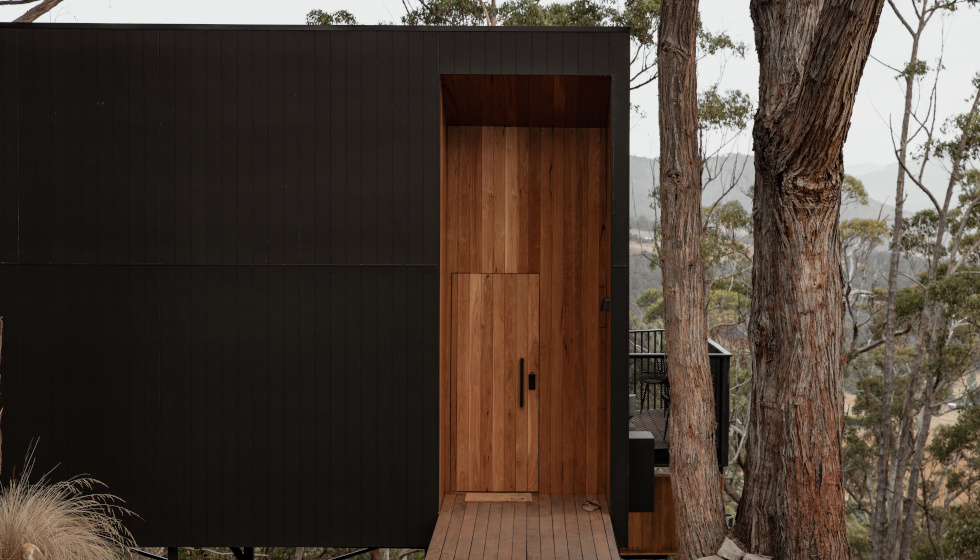
Next up was the accommodation. Nestled in the bushland overlooking the Huon Valley, we stayed at Hunter Huon Valley for the night. This adults-only retreat has three luxury cabins, each designed for one-to-two people. There’s no TV or Wi-Fi in the cabins: they encourage guests to switch off and really lose themselves in the moment. Needless to say, that’s exactly why we booked.
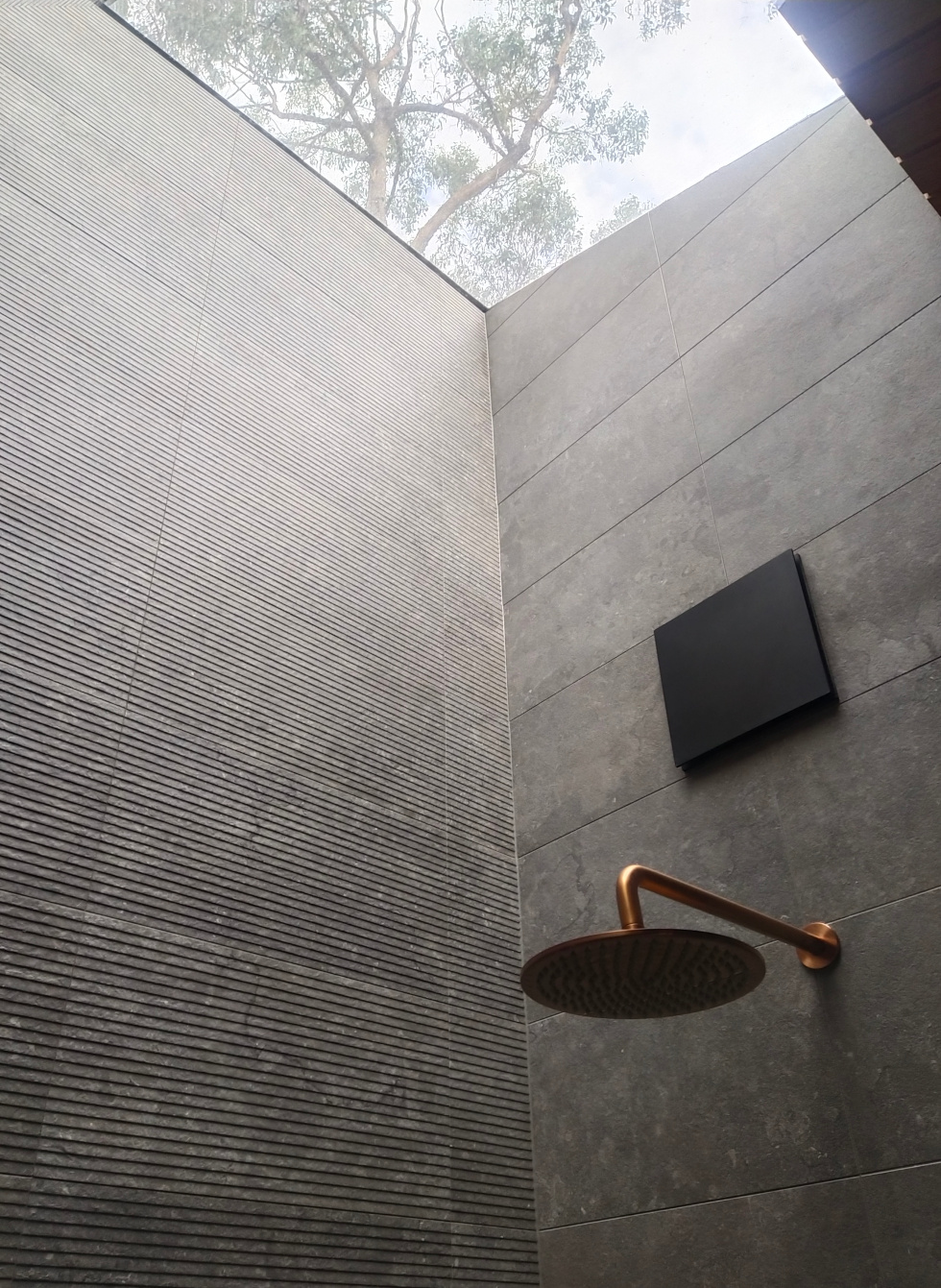
The first thing that caught our eye when we stepped inside was the large, deep stone-composite bath right against the window, with views over the trees. It’s a striking bath that made us want to jump in straight away and relax. The cabin also had a queen bed, a wood fireplace all set up and ready to go, an ensuite with a skylight, a private deck overlooking the valley, and full kitchen facilities, including a coffee machine with beans ready for grinding.
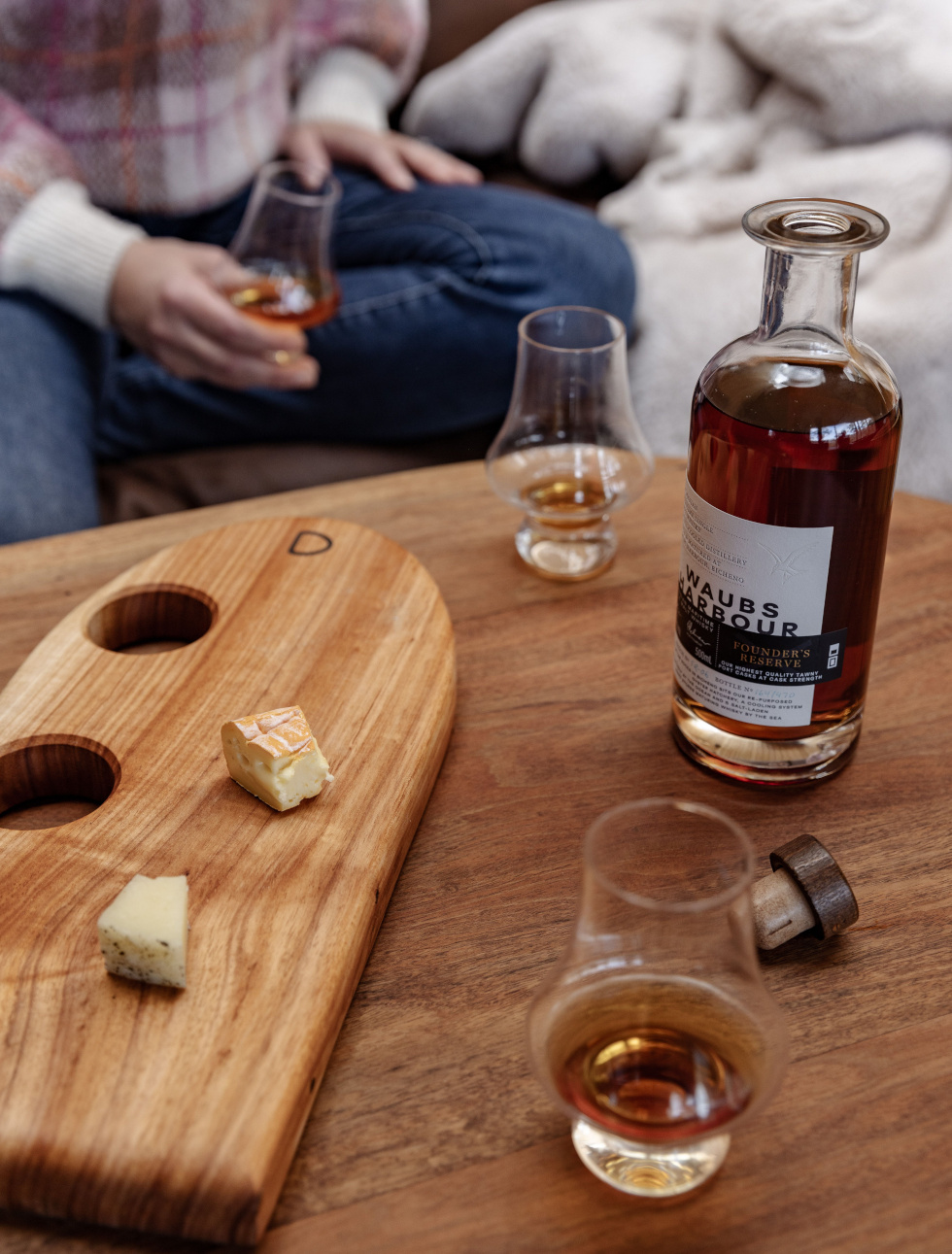
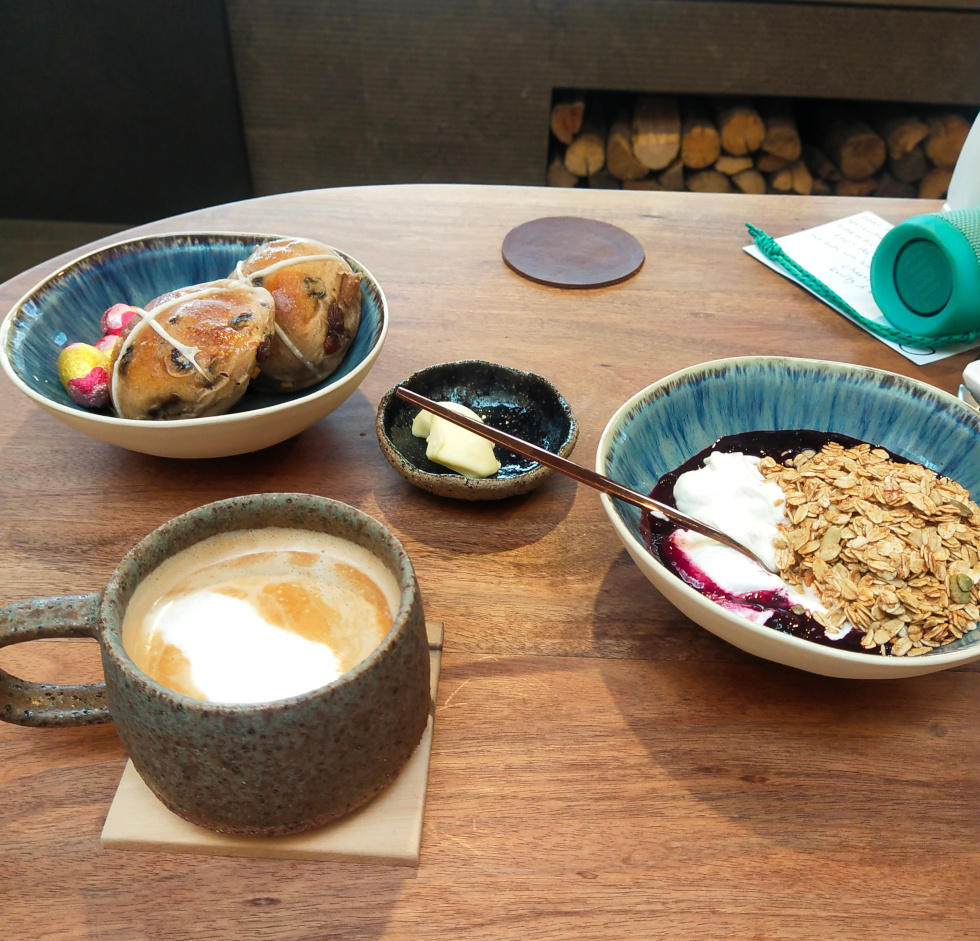
My favourite part of the property was all the food and drink included in the rate, things that usually come as extra. Breakfast was included, which was yoghurt and granola, plus two little bottles of apple juice. There was milk for the coffee and chilled water in the fridge. Dinner was included on our first night, a kind of Indian lamb curry. It was already prepared, so we just had to heat it up and boil the rice. There was also a cheese platter with a soft and a hard cheese, plus a bottle of wine. Honestly, if you’re only staying one night, you don’t need to bring any food, it’s all sorted. And if you have allergies or preferences, you just let them know when you book.
Maybe it was because all the food was included, clouding our judgement, but it was all really good. Or maybe it’s because Hunter prides itself on working with Tasmanian producers and makers. Everything, from the ingredients, to the washing products (Milie Organics), the cutlery and crockery made from wood by Tasmanian craftspeople, and even the coffee beans (Zimmah Coffee), is local. It’s those little details that made the stay feel extra special.
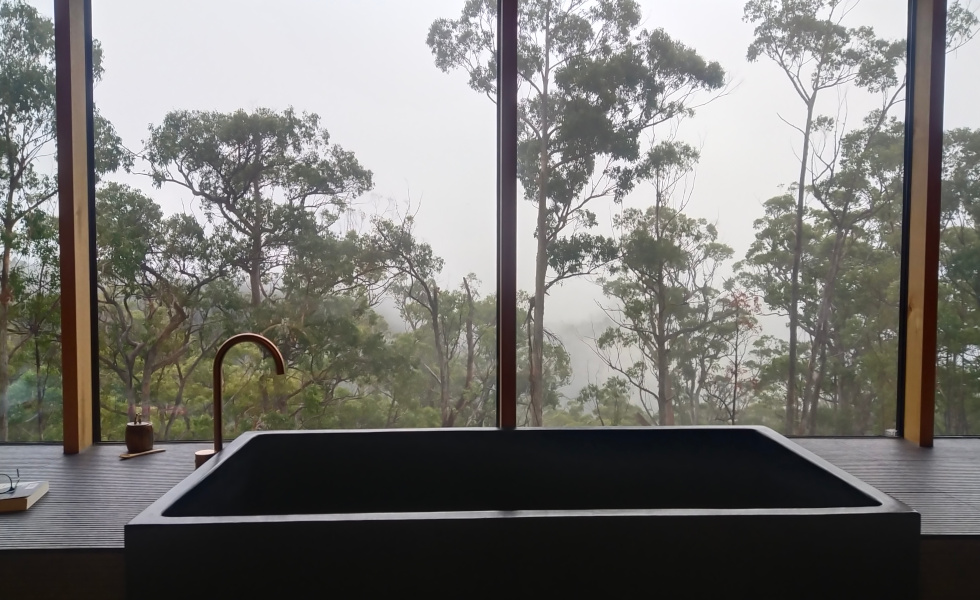
After wandering around the forested property for a while, we headed back to the cabin, got the bath running, and tossed in some lavender-scented bath salts. The perfect picture of relaxation might just be soaking in a big stone bath in winter, with a glass of wine nearby and a book in hand, all while overlooking the Huon Valley as the sun sets. We spent the rest of the night hanging out, enjoying the wine, chatting, and admiring nature. It was what the doctor ordered.
There are no curtains or blinds in the cabin, and there’s a skylight right above the bed so you can see the stars, so the next morning we woke up as the day started. The view over the valley was something else, mostly because we couldn’t see much at all. It was covered in mist, giving the whole place a really magical, ethereal feel.
After enjoying a coffee, brekkie, and another bath (hey, gotta get the most out of your money), it was time to say goodbye to Hunter Huon Valley. We had family camping by the Esperance River that same weekend, near Dover, right in the deep south of the Huon Valley, so we decided to visit them. That meant a proper Huon Valley drive, cruising past charming, picture-perfect towns like Franklin and Geeveston. My biggest regret on this trip was not bringing any cash or coins so we could buy some apples from the roadside stands run by local growers. There’s always next time.

Stay up to date with everything happening at the Hobart Magazine.