
13 Ways to Get Your Summer Thrills in Tasmania
Make the most of the longer days this summer with adrenaline-fueled adventures and nature-rich experiences, right on your doorstep.

Are you a bloke and a bit hesitant to chat all things prostate with your GP in fear of an examination? Fear not. The protocol has changed and guys, you’re the winners! Associate Professor Michael Jones is Director of radiation oncology at the Royal Hobart Hospital and is a radiation oncologist at the Icon Cancer Centre – he explains how things have changed.
The prostate-specific antigen (PSA) screening guidelines have recently changed. What’s different now, and what should men be doing about it?
In August 2026 the Prostate Cancer Foundation of Australia released their updated national guidelines. PSA screening involves a blood test measuring the prostate-specific antigen (PSA). Now, from age 50, your GP should start a discussion about the option of PSA testing every two years. Men concerned about their prostate health, or men at higher risk, such as those with a strong family history, have the option of commencing PSA testing from age 45. The fixed cut-off at age 70 has gone, and now men over 70 have the option of PSA testing depending on their overall health. Another big change is what happens after an elevated PSA level. The PSA is repeated, and if it remains elevated an MRI scan is recommended before any biopsy is considered, reducing the need for a biopsy. The take home is: if you’re 45 or over, raise prostate cancer screening at your next GP visit. It’s a simple blood test.
What is active surveillance, and why is it now preferred over immediate treatment for low-grade prostate cancer?
Not every prostate cancer needs treatment. Prostate cancer is classified into low-, intermediate-, and high-grade cancer. Low-grade cancers often grow so slowly they’ll never cause harm in a man’s lifetime, while treatments such as surgery and radiotherapy carry a risk of unnecessary side effects. So, we now offer active surveillance for these low-grade cancers. Active surveillance is a structured program of regular PSA tests, scans, and sometimes repeat biopsies. Treatment remains available should the cancer change.
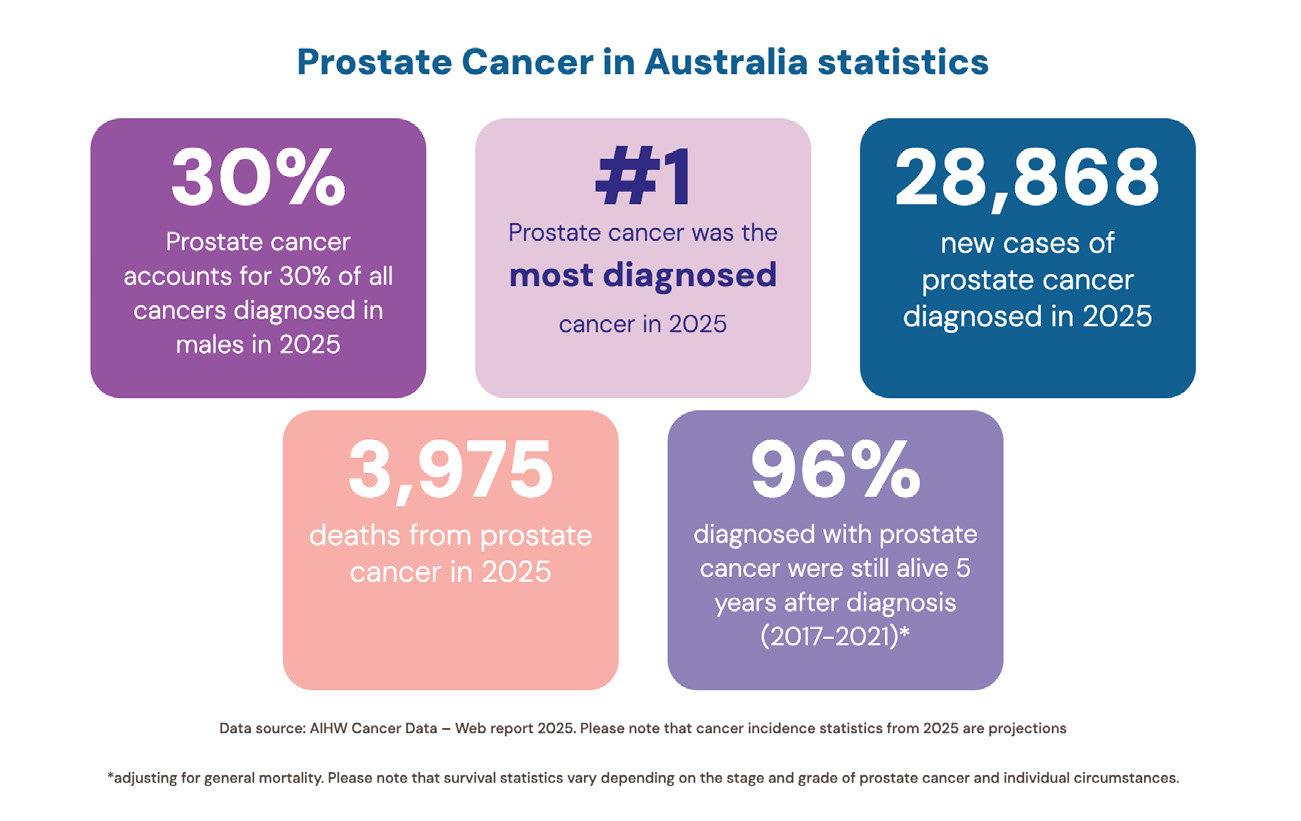
What are the biggest myths about prostate cancer you’d like to bust?
“Screening means a rectal examination” – false. It’s a blood test, and the new guidelines recommend against routine rectal exams.
“No symptoms means no problems” – false. Most early prostate cancers cause no symptoms. That’s why we test rather than wait.
“Men die with prostate cancer, not from it” – false. Prostate cancer is the second leading cause of cancer death in Australian men with almost 4000 deaths per year.
“It’s an old man’s disease” – false. Over 3000 Australian men in their 50s are diagnosed each year and the rates in men under 50 have been increasing.
“Men in their 70s are too old for screening” – false. The old guidelines discouraged it, but the new guidelines recognise that the average man who reaches 70 can expect to live into his mid-80s if he’s otherwise healthy.
Anything else our readers should know?
I regularly see men presenting with advanced incurable prostate cancer. Many could have avoided it with a simple blood test years earlier. It takes five minutes with your GP. Have the conversation


Stay up to date with everything happening at the Hobart Magazine.