
13 Ways to Get Your Summer Thrills in Tasmania
Make the most of the longer days this summer with adrenaline-fueled adventures and nature-rich experiences, right on your doorstep.
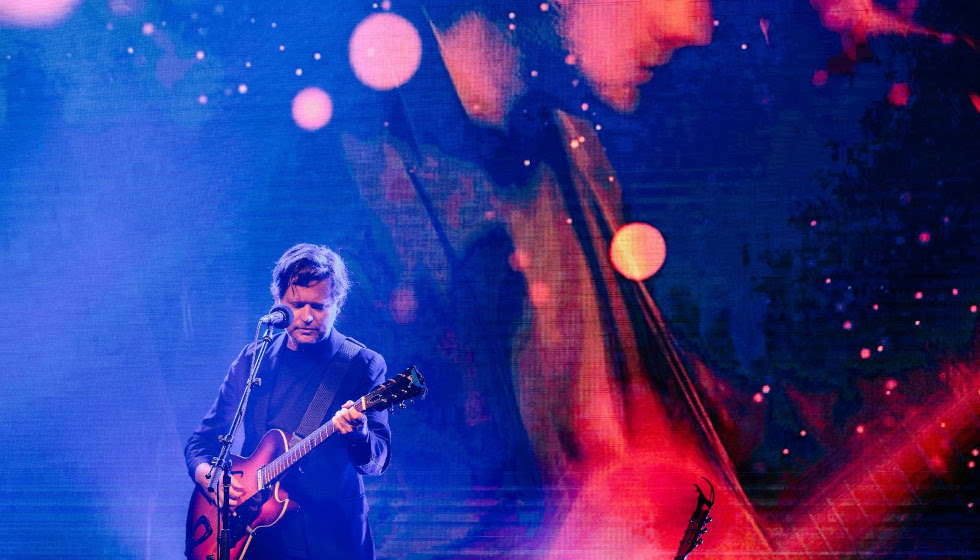
Glenn Richards is the singer-songwriter and guitarist for Australian rock band Augie March. He’s also a Hobart resident and he’s had a huge year. From releasing a new Augie album, and a two-volume compilation of unreleased solo tracks, to scoring the hit horror film Late Night with the Devil.
Augie March’s new album, Malagrotta, was written from notes on a mobile phone while you were dealing with COVID and enduring a brutal European summer. Can you tell us more about that? I was over there on a long delayed trip and had suffered my first bout of Covid a little while before leaving. I felt like I was experiencing the vestiges or after effects of an illness and in pretty full recovery but jetlag, heat and the usual stresses of long distance travel seemed to give it legs. A vague and ever present, occasionally loud, paranoia, considerable fatigue, almost an hallucinatory state at times. The best I could manage was to feed whatever feverish imaginings I was having into emails to myself that I would collate later on and draw songs from.
The songs on Malagrotta take listeners on a journey through various European countries. How did these places influence your songwriting? I’ve always responded strongly to new environments, sometimes well and sometimes negatively. When you’re in places you’ve only imagined, those reactions come strong and always flipping from one to the other. It’s a decent dynamic for a writer, being away, being challenged and moved in strange ways, but that rarely means you actually like it. It’s more of a defensive resort than a pleasant compulsion.
Why did you choose to name the album after the infamous rubbish dump in Rome? It’s more the metaphor for a state of mind, and for our world at large. We’re very fortunate to breathe relatively clean air and move about in space the way we have it in Tasmania. People don’t need to hear another ‘creative’ telling them that we’ve done a crippling number on the planet, but it’s there at the centre of everyone’s thinking whether they choose to believe it or not. I think you can bring allusion into the songwriting world and along with a sense of historical reflection, dream and imagination, create something that speaks to large fears while not being overly literal or preaching.
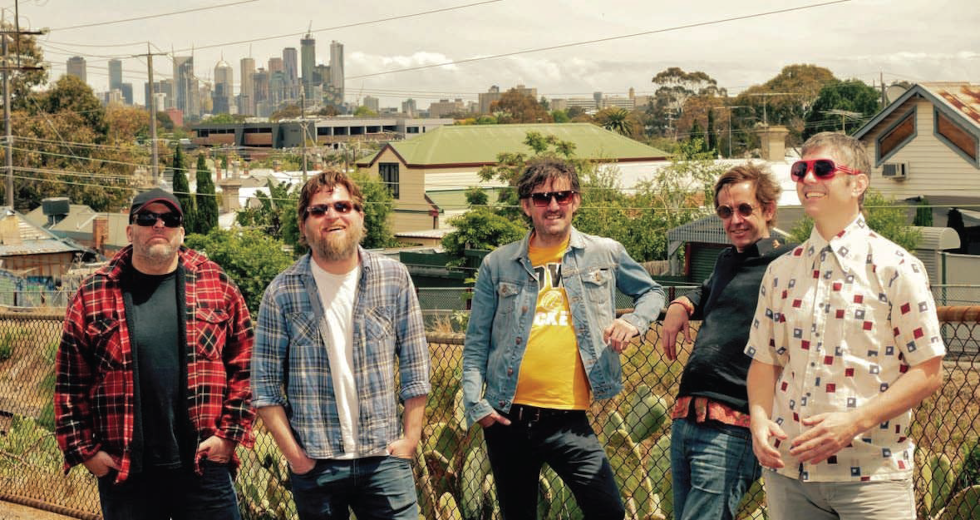
The release strategy for this album, with minimal marketing and avoiding Spotify, goes against industry norms. Was it important for you to release the album this way? We went to Bandcamp because there’s a fair exchange between audience and band and everyone feels like it means something, just a little. There’s no stopping streaming, and unfortunately there’s very little chance for small to mid level acts having careers anymore or advancing beyond where they’re at – in Australia the live circuit is close to terminal for all but a select few acts. Not paying for public relations was about not being able to justify the expense. We’re just trying to make good, unique records that a few people might discover these days. I think that was always kind of my aim, much as I’ve appreciated a bit of wider attention.
Some of the lyrics in this album reference Sebastianism, the Old King Cole nursery rhyme, and the Pulcinella character archetype. Do you enjoy writing lyrics that invite deeper research? It’s a way I have of keeping myself interested and hoping that the same thing happens for the listener. It might simply give them the feeling of something they can’t nail but it’s a familiarity. And if it means they go on a journey beyond the song then that’s a bit of effective art. Where I’m at I can listen to instrumental music fine, but there are desperately few people writing anything especially interesting in the popular music world, you gotta try a bit.
How did you approach curating your solo compilation Deep Demonstrations? Really it was a leisurely trawl through some old hard drives followed by a bit of rudimentary mastering. I knew there was a lot of material from the period in question but I hadn’t listened to it in years. Some of it holds up, but the only guiding light for me was knowing that for our audience it’s often stuff that doesn’t hold up for me that does the trick for them. The two collections just underline that as a songwriter I’m all over the shop, and usually breaking things I haven’t paid for yet.
Many tracks come from projects that didn’t come to fruition. How do you handle the disappointment of projects not moving forward? Songwriting and film composing are hard scrabble. Always you’re fighting for scraps and for most of us there’s very little expectation that what you do will live longer than five seconds. And when you’re working in film and television, areas which are just as fraught in Australia as non-subsidised original music, you learn to expect things to gather dust or just flame out.
How did you get involved in composing music for Late Night with the Devil? The excellent Cairnes Bros, who made the film, worked on a couple of early Augie March film clips and I composed for their first two features. We get each other and they have always been pleased with my ability to not just fathom the vibe and parse the layers, but do the basics, do them quickly and in a one stop shop. We work economically and they are brilliant – Late Night with the Devil is a beautifully made film and deserves all the plaudits. It’s actually a good deal of fun making the audio for them as you can let your mind go to many places, and generally the brothers will be there waiting for you, smiling.
When you’re not working on music, what do you enjoy doing in Tasmania? I’m a big walker so I’ll drift about and pretend I’m a tourist in my own sweet town. I’m also lucky to have a great old pile of a joint up on a hill with an unconquerable garden that I can keep chipping away at. Most Tasmanians know you can hop, skip or jump in any direction and you’re somewhere beautiful. We’re very lucky people and I hope we don’t forget that in the rush to keep up with the rest. We’ve got our own thing going here, thanks to the interesting people who live and love it and want it to grow organically and strangely like it always has. The mainstream is boring and not a Handfish in sight.
Stay up to date with everything happening at the Hobart Magazine.