The Hobart

True Lies

by Annia Baron
True Lies

How would you respond if you were taking medication, feeling that it was helping, to then learn that when clinical trials were undertaken to gain its approval, the effects of the drug didn’t outperform that of a sugar pill? What if you also knew that during the testing period, the sugar pill produced better results than the actual drug. Would you continue taking your medication?

One of the most fascinating placebo studies was conducted in 2002 with 180 patients who were diagnosed with osteo­arthritis of the knee. They were randomly assigned into three groups, all unaware of which treatment they would be receiving. The first group underwent surgery to remove cartilage, the second didn’t have bone removed but their joint area was cleaned with saline solution, and the third were given a placebo procedure, whereby small incisions were made into the patient’s skin to make it seem that surgery was performed. Compared to those who had operations, people in the placebo group reported significantly lower levels of pain following their ‘surgery’. Even after two years, the participants in the placebo group maintained the same effects (and some, better) compared to those who were operated on.

It’s one thing to be involved in a medical trial, where you give consent to the pos­sibility of being deceived but in the real world, it’s not so simple. When Professor Kaptchuk from Harvard Medical School wanted to explore what would happen if we were upfront about placebos – in other words, telling people they are taking a sugar pill or receiving an inert treatment – his colleagues thought he was nuts. After all, the premise of a placebo effect rested on the assumption that it needs to be concealed in order to work. However, he repeatedly found that even when people were told they would be given an inactive treatment (referred to as open-label placebo), it still helped them feel better. In his study of partic­ipants with irritable bowel syndrome, the effects for those who were informed they were taking a placebo were equally successful compared to those who weren’t told upfront.

Why do we get better even if we know the treatment isn’t real?

There are two theories for why open-label placebo can be effective:

  1. Expectations: simply believing that something is going to work creates hope. This shapes the way you pay attention to bodily signals. So, when you have an expectation for some­thing to work, you focus on sensa­tions that align with your belief of “I’m feeling better” versus scanning for indicators that suggest “I’m in pain.” This is backed by neurosci­ence too because we know that our perception of things is just our brain taking a ‘best guess’ interpretation of information from our sensory organs. But what’s interesting is that by the time someone signs up to be part of a clinical trial, they’ve probably got low expectations for things to work, given that they’ve likely tried and exhausted all other options. This is where condi­tioning comes in.
  2. Conditioning: think of Pavlov’s famous experiment with dogs. They learned to associate the sound of the ringing bell with food arriving and therefore being fed. It didn’t take long for them to salivate simply at the sound of the bell. For us humans, it’s the same thing. We can associate taking a pill with feeling better, and over time, we’ve learned that the act of taking something leads to positive improvements – even if the active ingredient in the treatment pill is removed.

Could it be that open-label placebos are generating positive results because patients are just telling researchers what they want to hear? Perhaps. But studies show physically measurable changes too, including reduced neural markers of pain and stress and associated brain waves.

The American Medical Association states placebos are ethical to use in enhancing healing on their own or with standard medical treatment, only if agreed to by the patient. In clinical settings physicians might use placebos in more subtle ways, such as expressing a strong belief of the likelihood that a particular treatment is helpful. A survey of physicians in the UK found 97% acknowledged using some form of placebo and in Australia, approx­imately 80% of GPs believe that openly providing placebos with the patient’s knowledge is ethical. Doctors who use placebos report they do so because they believe placebos could provide genuine benefit and viewed themselves as having a strong role in shaping patients’ expectations.

Placebo effects demonstrate the power of the mind and give us insight into our ability to harness it. Although open-label placebos can bypass the deceptive nature, there’s more research to be done. By learning about how our brain and body make sense of these processes, and how expectations can influence our reality and treatment outcomes, we can continue making decisions that feel right for our individual needs and honour our unique personal health desires.

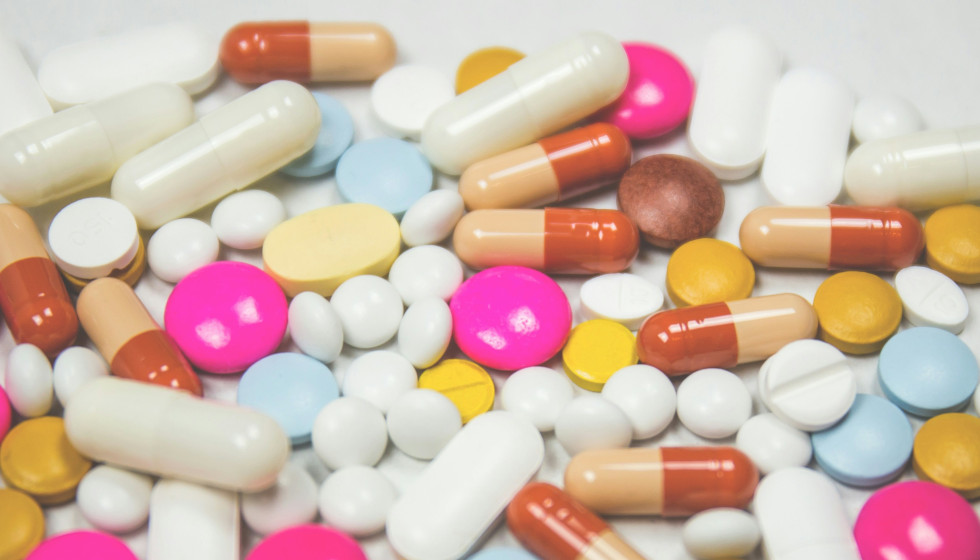
Did you know that studies have shown that the size and colour of a pill can influ­ence its effects? A big orange pill can reduce pain better than a small, red one. Blue coloured pills tend to have more of a sedative, relaxing effect.

Full references are available at www.thehobartmagazine.com.au.

Annia Baron is a Clinical Psychologist & Mindset Coach. Want to learn more about mindset tools to create a life you desire and deserve? Get in touch on Instagram @anniabaron or visit www.remindyourself.com

Love this

Related Articles
Share

Close
13 Ways to Get Your Summer Thrills in Tasmania
Make the most of the longer days this summer with adrenaline-fueled adventures and nature-rich experiences, right on your doorstep.
Arve Falls Lookout
Feeling stifled from long days of mask-wearing? Luckily, in Tasmania we are never far from somewhere beautiful to escape to on our days off – and breathe in lungfuls of restorative fresh air, mask-free.
27 Hobart Friends Get Snipping For One Off Wine
The borders were declared shut in Tasmania on the 30th of March, 2020; the first stare to do so amid the COVID- 19 pandemic and hard lockdown of Hobart followed.
Danphe Nepalese and Indian Food + Peppermint Bay Bar and Bistro
Nepalese food is a comfort in our house. Having spent much time trekking and mountain climbing in Nepal as a younger man, Nepalese food is something I always love to go back to.
That’s DR Hannah Gadsby To You
From Smithton to Netflix and the Emmys stage, Tasmanian stand up comic Hannah Gadsby has forged an unlikely path. Following on from the massive success of her shows Nanette and Douglas, Hannah brings her new show Body of Work to Hobart this month.
PODCAST: Incat founder Robert Clifford on why electric boats are the future
Robert Clifford is the founder of Incat, a Hobart company building fast ferries for the world. Always looking to future opportunities, he has identified where Hobart sits in the next wave of transportation. For more of this interview listen to The Hobart Magazine podcast.
Is Tourism Ready For More Forestry Wars?
Tasmanian forests are special. They’re home to centuries-old trees, including the tallest flowering trees on the planet, and support unique native species. Yet not everyone agrees on how these forests should be managed.
Hobart Chefs: When The Obsession Becomes Real
Tasmania’s brand as a foodie haven is cemented. But within the local hospitality industry there are those who love to use local produce...and those who are next-level obsessed with it. We spoke to a bunch of Hobart chefs who are top of the game when it comes to fostering relationships with local farmers and growers.
Did You Know Australia’s First Female Doctor Was Hobartian?
Tasmania, despite its small size and population in comparison to the mainland, has produced more than its proportionally predicted percentage of significant figures and heroes of Australian history. 
Return Travellers Adding Pressure to Hobart Housing
For all of us 2020 was a year like no other, punctuated by rapid change and plenty of new challenges. For vulnerable people in Tasmania, including people facing homelessness, those on low incomes and those facing increasingly higher rents, it was very challenging. We are seeing a growing demand for homes in Tassie from international travellers returning home, people moving for work and others seeking the lifestyle that our Apple Isle has to offer.
Magazine
AboutContributeAdvertiseNewsletter Sign UpContact
June 2026

Stay up to date with everything happening at the Hobart Magazine.

Worker shortage is currently universal, there isn’t an industry that’s exempt. For Kelvin Smith, four years ago he decided there was a very obvious solution to the shortage facing the construction industry, and all that was needed was a little time, empathy and a helping hand. Integrate Workforce is a Hobart-based labour company with one requirement: a refugee/ migrant background. He’s also the outdoor piano man in his free time.

Landscape artist and creative Elliott Nimmo is enjoying discovering Hobart’s vibrant art scene and local environment after relocating here from London to pursue his art.

Even though Tasmania is known for its mild summers, it doesn’t take much to get sunburnt. Tasmania experiences extreme ultraviolet (UV) levels, but contrary to popular belief this isn’t due to the hole in the ozone layer, which is actually south of the continent.While higher UV levels often occur at the same time as higher temperatures, the two are not linked. Instead, UV levels are determined by the angle of the sun in the sky: the higher the sun, the higher the UV. In December and January, the position of the sun over Tasmania gives the state a UV index of 11 or more on most days, which is classified as “extreme” on the UV index. Tasmania’s lack of humidity and generally clear skies contribute to the stinging feeling of the sun. UV can reflect off buildings and water, making it possible to get a higher dose of UV from these reflected rays, even in the shade.

Setting up shop during a pandemic was a risky move, but if the crowd at Dāna Eating House (Dāna) on a Friday night is anything to go by, it’s one that’s paid off. With tables of diners chatting and laughing over drinks, the music and conversation buzzes off the monstera-leaf-green walls. Low-hanging rattan lights and worn wooden floorboards give the newly opened South-East Asian fusion venue in Hobart’s CBD a relaxed vibe.

A Holyman flagged ship hasn’t steamed up the River Derwent since 1984 but the company’s name still proudly adorns its former offices at 5 Morrison Street, Hobart.

Widening the Tasman Bridge to allow 3.5 metres on each side is a big win for walkers and cyclists.
Need a laugh? Check out @theinspiredunemployed feed on Instagram.
Rain, hail and shine, the school crossing guards are always there to help with a smile on their face.
It’s hard to believe it’s not standard practice to have a working phone in every aged care room - shared phones make private conversations impossible and increase the risk of spreading COVID-19.
Just when you think your cousins are alright. NZ Opposition Leader Judith Collins took aim at Tassie during her recent (unsuccessful) campaign, calling us Australia’s “poor cousin.” She also seems worried about us nabbing tech businesses, “It’s a lovely part of the world but do you necessarily want to go there with your high- tech business? Possibly not,” she said. We beg to differ!