
13 Ways to Get Your Summer Thrills in Tasmania
Make the most of the longer days this summer with adrenaline-fueled adventures and nature-rich experiences, right on your doorstep.
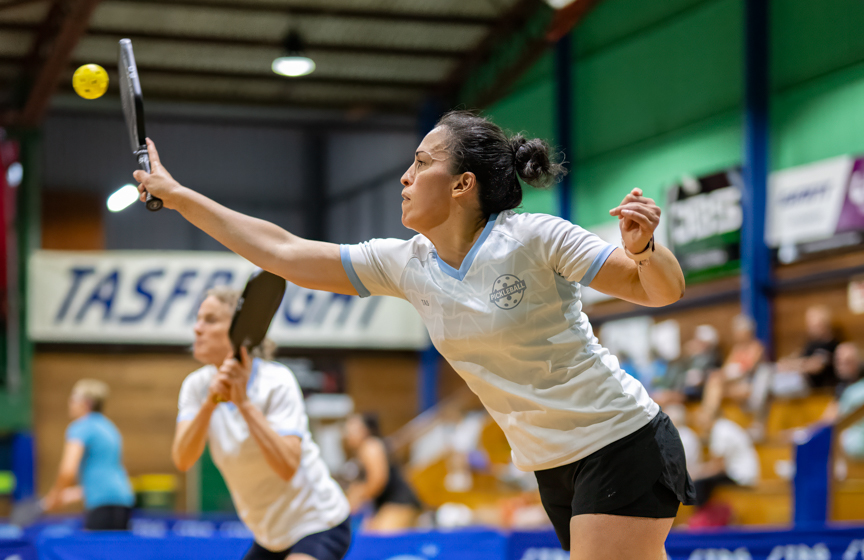
Pickleball – which has nothing to do with pickles – is a sport that has loudly taken over the world. Between 2021 and 2024, it was the fastest-growing sport in the United States. Amid that global rise, pickleball found its way to Tasmania in 2019 from a small band of locals.
Fast forward a few years and Tasmania’s pickleball scene has turned into something bigger. What started as a group of four enthusiastic players became Pickleball Tasmania, which officially became a thing in January 2021. Today, it boasts 748 paid-up members and more than 1,000 regular players across the state.
Curious, we got in touch with Lee-Anne Knight from Pickleball Tasmania’s committee to make sense of it all. “The popularity of pickleball was driven by a few dedicated individuals who shared their love of the sport and there are now seven pickleball clubs and 15 playing groups around the state,” Lee-Anne tells us.
For the uninitiated, pickleball is basically what happens when tennis, badminton and table tennis have a baby. The court is badminton-sized, with a net in the middle, and the game can be played as doubles, singles or “skinny singles”, which is a half court game. Instead of a racquet, you use a paddle to hit a plastic ball with holes in it.
So why has this fairly sport blown up around the world? According to Lee-Anne Knight, it comes down to two things: simplicity and accessibility. “It is easy to learn, can be played by all age groups so multiple generations can play with and against each other, and it is suitable for all ability levels,” she says.
The all-ages aspect is especially important. Pickleball is a low-impact sport so it’s an ideal way to build your fitness without putting too much strain on the body. “It is a great activity for those who have not been active or played sports for many years,” Lee-Anne says. “Essentially, you dictate what level of intensity you play at ensuring that everyone can enjoy the benefits of this inclusive activity. It is kinder on joints than many other sports so is more suitable for older community members.” Also helpful: Tasmania’s unpredictable weather isn’t a deal-breaker, because pickleball can be played both indoors and out.
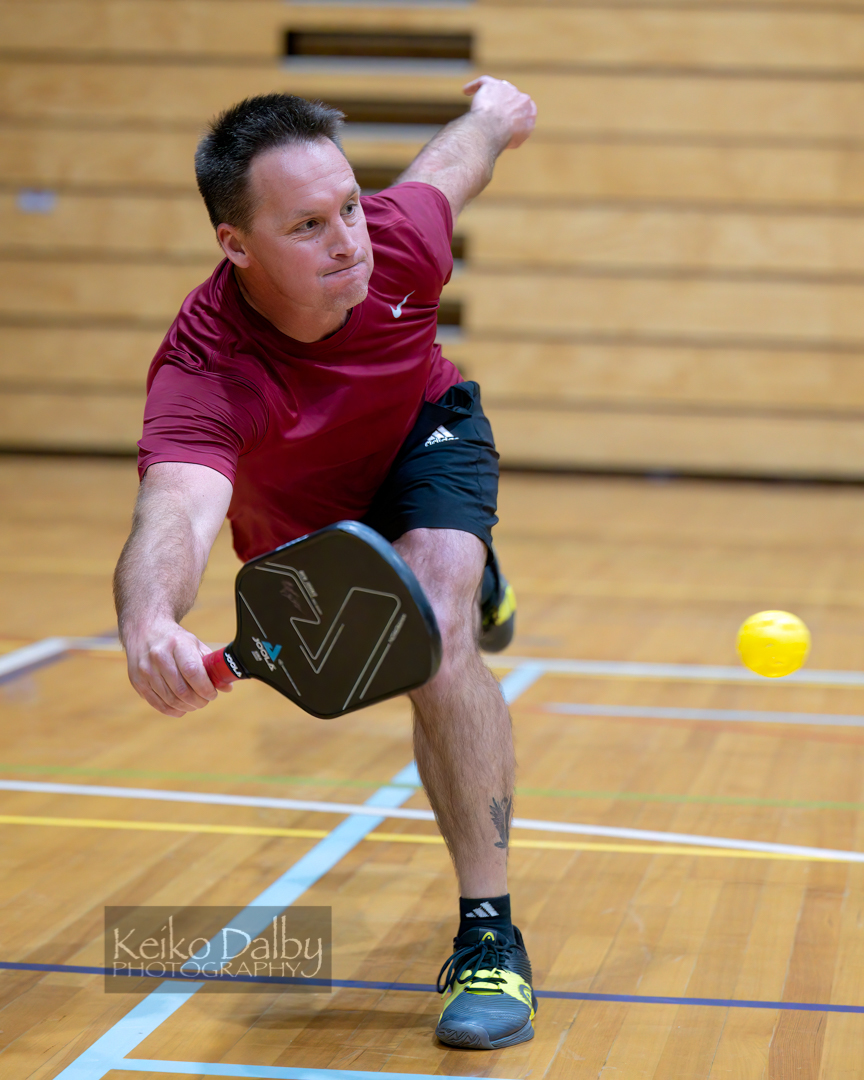
It’s also a sport that’s making room for more people. Pickleball Australia has formed an Inclusion Committee to help expand ParaPickleball, a version of the game adapted for people with disabilities, across both social and competitive levels.
When it comes to clothing in pickleball, it is very casual. “There is no dress code for social pickleball in Tasmania although comfortable clothing you would normally wear to play tennis or go to the gym is recommended,” Lee-Anne says. “Some people love to make a statement with their clothing choices, especially in tournaments, where they will match their outfit to a theme.” Ultimately, though, she says pickleball is not about how you look, but how you feel and how much fun you are having.
Pickleball Tasmania is accommodating the growth in player numbers and interest in pickleball as a spectator sport by adding more events to the calendar. Currently, there’s the Latrobe Pickleball Classic in February, the Tasmanian Championships in March, a Southern competition in June, North vs South in August, and the Devonport Pickleball Grand Slam in November.
There’s competition, sure, but pickleball is primarily a very social game. “Almost all people play pickleball not just for the physical/active side but for the positive social interactions at each session,” Lee- Anne says. “You will find us heading off for a coffee together after hard-fought matches or enjoying a barbecue or beer after an evening session. Pickleball, at its very heart, is about all people having the opportunity to have a great time while keeping active, both physically, mentally and socially.”
In the U.S., this has escalated into what are now called Picklebars, hybrid spaces where you can play a few games then have a drink in one place. It’s a concept Lee-Anne would love to see here one day, but for now the main priority is space. “There is a shortage of playing spaces due to a lack of facilities and this is something that the Tasmanian Pickleball community will continue to champion so all potential pickleballers have the opportunity to get active and enjoy all the benefits of pickleball and this ever-growing community,” she says.
If you are interested in giving Pickleball a go, visit the ‘Where to Play’ page on the Tasmanian Pickleball website. There are clubs and playing groups all around Tasmania that welcome new players.


Stay up to date with everything happening at the Hobart Magazine.