
13 Ways to Get Your Summer Thrills in Tasmania
Make the most of the longer days this summer with adrenaline-fueled adventures and nature-rich experiences, right on your doorstep.
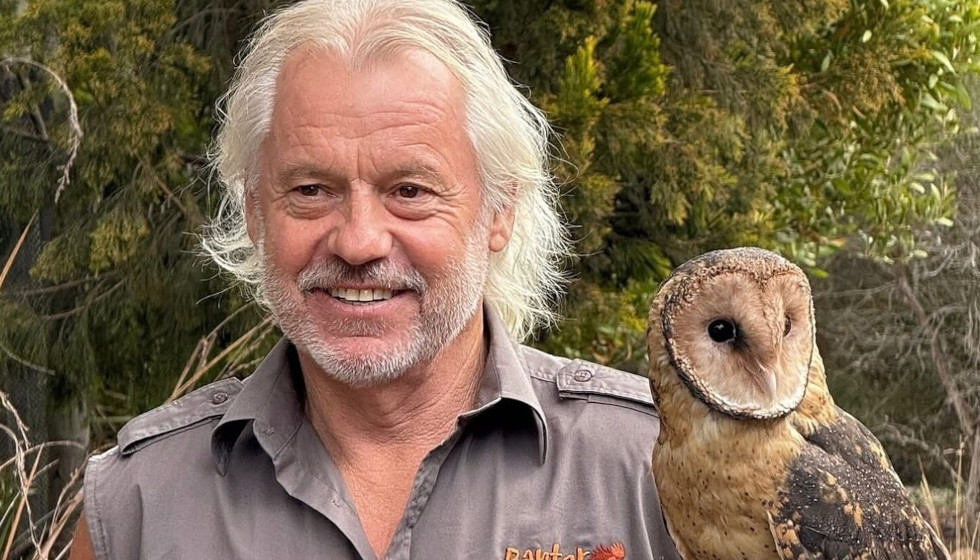
On a 20-acre property overlooking Kettering and the D’Entrecasteaux Channel, something remarkable is happening: sick, injured, and orphaned raptors are being rehabilitated and released back into the wild.
Raptor Refuge is Tasmania’s only dedicated facility for raptor rehabilitation. It’s a not-for-profit organisation, run by a passionate team of volunteers, and it doesn’t receive any government funding. Their most common residents are wedge-tailed eagles and white-bellied sea eagles, but they also care for owls, falcons and other Tasmanian birds of prey.
The refuge was founded in 2001 by Craig Webb OAM, who made it his life’s mission to protect Tasmania’s beautiful and threatened raptors. Driven by nothing more than a deep love for these birds, Craig has spent the past two decades building the refuge from the ground up.
Earlier this year, Craig was awarded an Order of Australia Medal for his dedication to wildlife care. He also recently opened a semi-luxury accommodation offering on the property, called Eagle Ridge Retreat. All profits from the retreat go directly back into supporting the refuge’s vital work.
But Craig’s journey didn’t start with raptors. “When I started out I was basically helping all wildlife, from Tasmanian devils to wallabies, but raptors kept churning up,” he says. As more birds arrived, he built aviaries to house them. Over time, Craig became known as “the raptor bloke”, and eventually shifted his full focus to birds of prey.
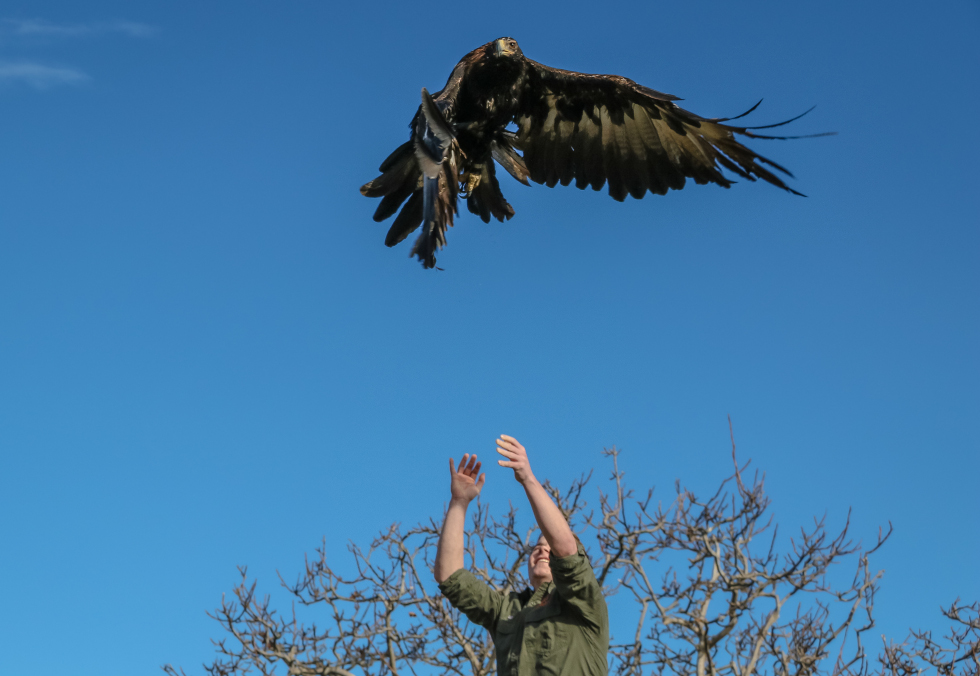
“The fact that we’ve come along and been successful in what we do is because there was a need for raptors in Tasmania needing help, basically,” he says. “There’s so many threats they face, and there wasn’t anyone that was dealing with it.” Since opening, awareness of their work has grown each year, and so has demand. More people knowing about Raptor Refuge means more birds can be saved.
Craig is involved in every step of a bird’s recovery, and it’s no small task. Raptors often require extensive care and a long rehabilitation process. He helped build the entire facility, including the aviaries, which are the largest in the southern hemisphere, specifically designed to flight-train the birds as they heal. They stand 21 metres at their highest point.
Alongside his team of volunteers, Craig is supported by his son, Ziggy. “Ziggy’s part of the team and he’s grown up with Raptor Refuge. We’ve been running for 25 years and he’s 22,” Craig says.
Education is another passion. Craig and the team offer school programs when they can, guide small-group tours, and special experiences like picnics and occasional workshops, all with the aim of raising awareness about Tasmania’s raptors and the threats they face.
Visit Raptor Refuge’s website or social media and you’ll likely see a powerful moment captured on video: Craig or Ziggy releasing a rehabilitated bird back into the wild.“That’s the goal. The ultimate goal,” Craig says. “People ask, ‘do you get sad?’ And I say, ‘no, exactly the opposite’. It’s a buzz to see them fly off.”
That’s part of why he doesn’t name the birds that come into care: out of respect for their wild nature. “They’re wild animals, so we’ve got to deal with them and we try to deal with them in a stress-free way as possible and fix them up and get them going the best we can.”
When asked what he wishes more people understood about Tasmania’s raptors, Craig says it’s their importance to the ecosystem. “We’re talking about the top apex predators. What they do is keep the rodent population down.” As apex predators, they control populations of smaller animals, prevent diseases by consuming dead animals, and maintain the food web. They’re also an indicator for the health of an environment. “People don’t need to buy rat poison where owls live, because you inadvertently kill the owls, which eat the rats.”
“The blatantly obvious thing I want to spread is the beauty of these birds. When you see them and the superpowers they possess up close and learn about them, they’re all incredible in their own special way.”
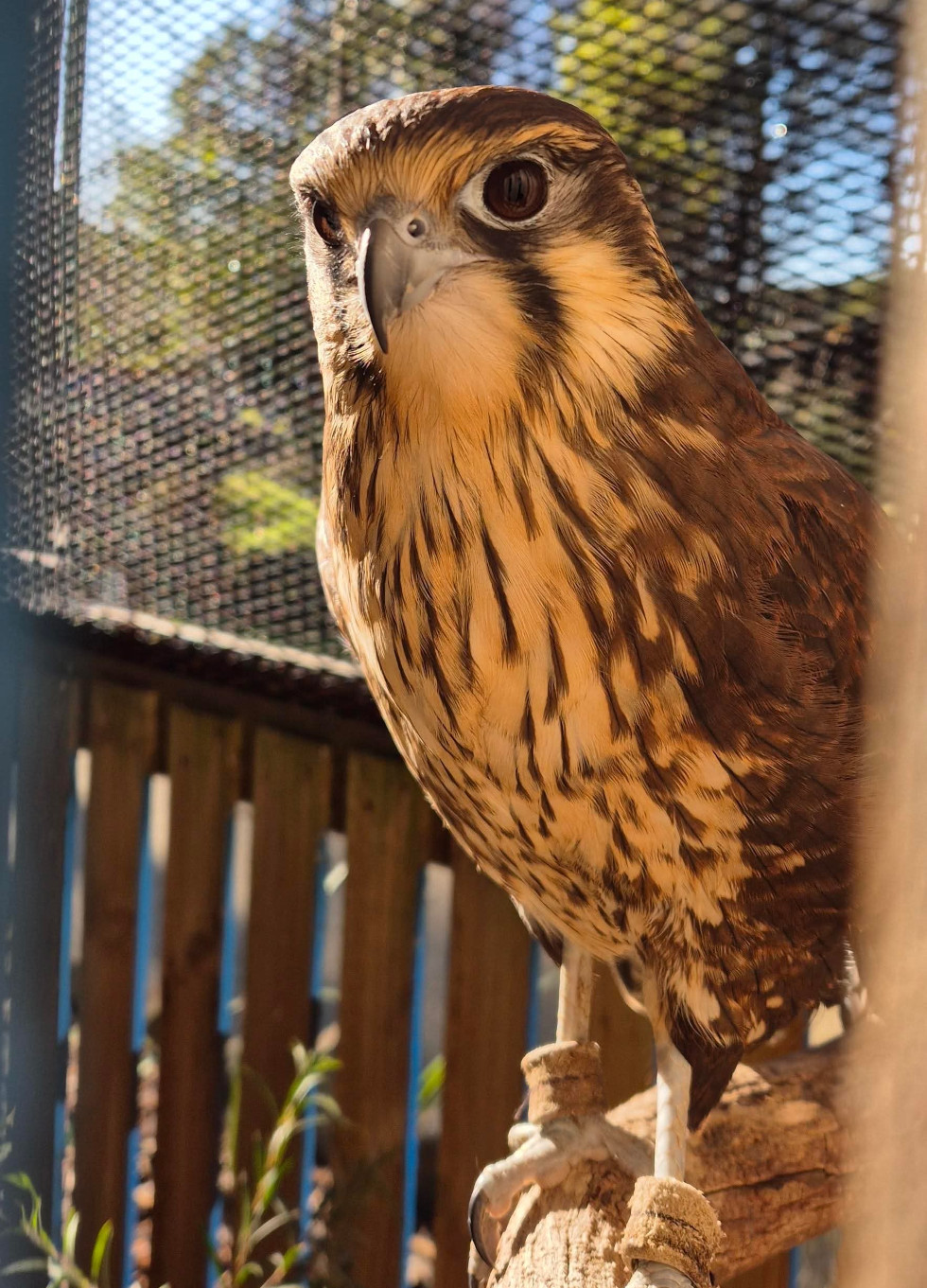
Sadly, Tasmania’s raptors face a wide range of threats: road accidents, poisoning, illegal shooting, pollution, entanglement in fishing nets and fences, land clearing. Its powerlines in particular are a serious issue for Tasmanian wedge-tailed eagles. Over the last five years, more than 100 confirmed deaths of these endangered birds have been attributed to powerlines in Tasmania.
Craig says not enough is being done. “The bare minimum has been done for powerlines, and why that makes me so frustrated is because we know exactly what to do. They (TasNetworks) are just not doing it at a fast enough rate. They aim to reduce the threat to wedge-tailed eagles by 25 percent by 2032. Going on what they’re planning on doing, we worked out it was going to take 180 years to do what they said they’d do in the next seven.”
So how can ordinary people help? “Become a member of the Raptor Refuge, which supports us in doing what we do. Taking roadkill off roads. Lobbying the government,” Craig says.
A major way to support the refuge is by booking a stay at Eagle Ridge Retreat, which opened earlier this year. “We built two semi-luxurious studios on the property overlooking the D’Entrecasteaux Channel in Kettering. One’s called the Wedge-tailed Eagle, the other the White-bellied Sea Eagle, and they’re both themed to honour these birds.” All profits go straight back to raptor care, and guests receive a discount on a guided refuge tour.
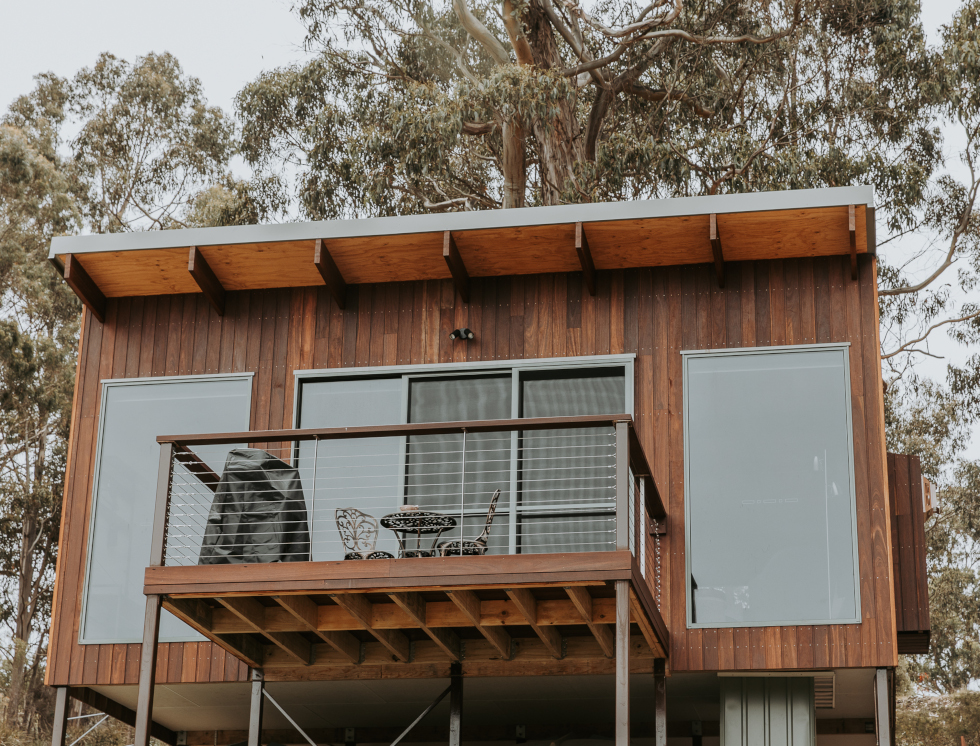
Last year was huge for the team. They released a book, Tasmanian Raptors and the Raptor Refuge, finished the accommodation, and gained tax deductibility status. And earlier this year, Craig was officially awarded his OAM, which has already started raising the profile of the refuge. “A lady in the UK contacted me, and she specifically brings people to Tassie from the UK to look at birds and the same book the accommodation. It certainly raised awareness.”
Before parting ways, Craig wanted to spread this message: “I’d like to say that Tasmania is an exotic location. From any other part of the world, Tasmania is an exotic location. I think that’s really important to know because we don’t realise that. We consider an exotic location to be Tahiti or Hawaii. But the fact is, Tasmania has got beauty abound, and the government is just not caring about it. We need to look after what we have here. It’s very, very, very special.”
You can donate to Raptor Refuge on their website, www.raptorrefuge.com.au. They’re also a registered donation partner of Tasmania’s Recycle Rewards scheme. If you’ve found an injured, dead or distressed raptor, call their Raptor Hotline at 1800 727867.


Stay up to date with everything happening at the Hobart Magazine.