
13 Ways to Get Your Summer Thrills in Tasmania
Make the most of the longer days this summer with adrenaline-fueled adventures and nature-rich experiences, right on your doorstep.
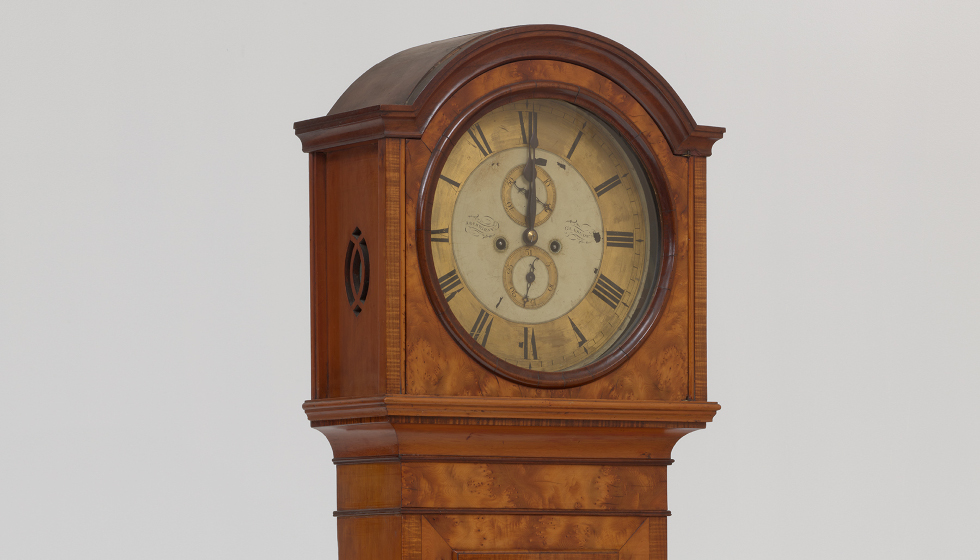
Senior Curator of the Tasmanian Museum and Art Gallery, Peter Hughes, has written a new book, Furnishing Van Diemen’s Land into the world; a colonial furniture history of lutruwita from 1803-1870, exploring the furniture and materials of that time.
In late 1803 and early 1804 two small British invasion fleets arrived at the Derwent with convicts, military personnel and some free settlers. At the time, the Palawa population is thought to have been around 10,000. While they defended their lands valiantly, the ships kept coming and the European population grew rapidly, reaching 70,000 by 1847, at which time the population of Hobart was about half of that of the ‘parent’ colony of Sydney. While there was an initial period of privation in which food ran short and the ports were closed to merchant shipping, increasing numbers of ships arrived with convicts and free colonists. The ports were opened to free trade from 1813 and by the 1830s the colony was booming.
The first mention of locally made furniture is in a 1806 diary entry by the Reverend Robert Knopwood, in which he complains about one of his convict servants using his wood to make a bedstead and a table for someone else. This timber would have been locally cut by convict gangs; however the colonists also began to import cedar from NSW as early as 1817 and other timbers such as Baltic pine, mahogany and rosewood soon after. The first Huon pine was discovered washed up in the D’Entrecasteaux channel. Clearly resistant to rot and ‘impenetrable to the worm,’ it was used for the coffin of the Lieutenant Governor David Collins in 1810. The supply must have been relatively abundant, as an 1814 auction list from the estate of Lieutenant-Governor Andrew Geils lists many types of furniture made from both Huon pine and NSW cedar. This was before the source of the timber was discovered by an expedition to Macquarie Harbour in 1815. The colonists were keen to find resources for local use and, more importantly, to export for much needed revenue. Other timbers suitable for furniture, such as musk, blackwood and others were soon identified and listed in newspapers along with their uses. Some of these were made acceptable by ready comparison to known fashionable timbers. However, it took the colonists some time to embrace Huon pine; the light colour of which was unfashionable and the smell considered unpleasant.
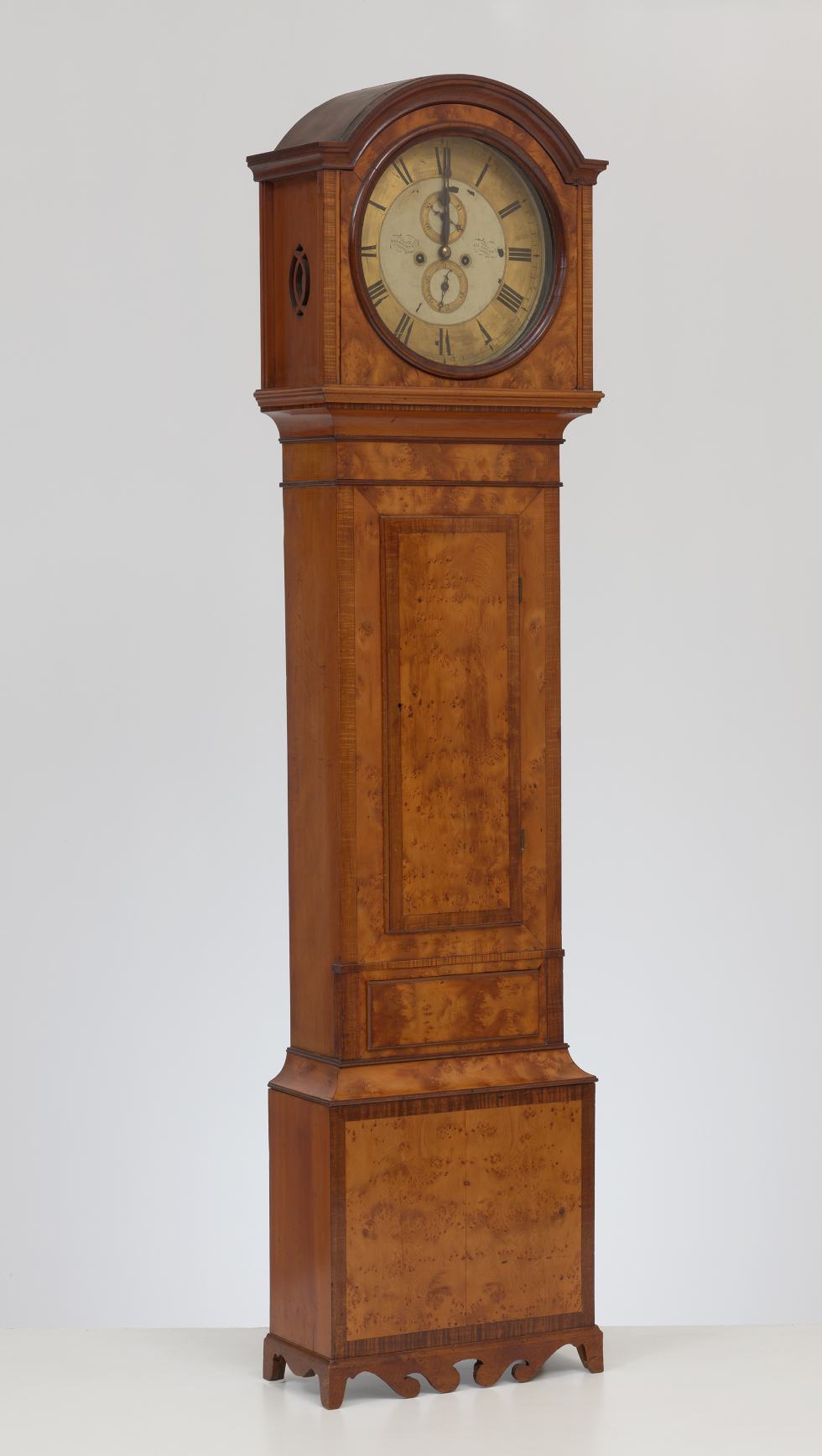
In the late eighteenth and early nineteenth centuries the best furniture was often veneered. At this time veneers were mainly cut by hand and were often several millimetres thick. They enabled cabinetmakers to use timbers with highly complex, decorative grain for the visible surface of pieces. In Tasmanian colonial furniture it is not uncommon to find highly figured Huon pine veneered onto plain, straight grained Huon pine or NSW cedar, which is much stronger and more easily worked. It took a couple of decades for the local timbers to catch on and there was considerable concern about the impact of imported timber and furniture on the local economy. Four elaborately carved and veneered torcheres (tall, floor standing lamp holders) made for the old Government House in the mid-1830s count among the earliest surviving pieces. By 1843 Robin Vaughan Hood was advertising ‘FANCY ARTICLES, made of the very best Huon Pine, Ladies’ Work Tables, Work Boxes, and Writing Desks, with secret drawers, superior to any hitherto manufactured of colonial wood’. In 1849, Launceston cabinetmaker John Brown advertised pieces of furniture made from ‘beautiful specimens’ of local timbers, many ‘adapted to be sent to England’. Similar specimen pieces in the TMAG collection include a ladies’ work table attributed to the Hobart cabinetmaker, William Hamilton that features Huon pine, blackwood, musk and casuarina, and a beautiful naïve star loo table with an elaborate geometric pattern in Huon pine, blackwood and eucalypt veneers.
The use of contrasting light and dark timbers is also a feature of Tasmanian furniture of this period. A teapoy (a large tea caddy with stand) in the TMAG collection is veneered with richly figured, light coloured, musk contrasted with dark ‘fiddleback’ blackwood. The Risby longcase or ‘grandfather’ clock, which contrasts superbly figured Huon pine with blackwood and cedar, might have been made to advertise the colonial timber merchant’s wares.
Stay up to date with everything happening at the Hobart Magazine.